
Telehealth FX Issues At-Home Reconstitution Safety Warning and Releases Bacteriostatic Dilution Verification Engine
Clinical alert highlights contamination hazards of gray-market lyophilized peptides while launching free bacteriostatic water dilution engine.
Dallas, TX - November 6, 2026-- Telehealth FX has issued an urgent public health and clinical safety advisory alongside the deployment of its free interactive Tirzepatide Bacteriostatic Water Dilution Verification Engine, addressing the dangerous proliferation of unverified at-home peptide reconstitution. The advisory warns consumers against acquiring non-pharmaceutical lyophilized powders labeled for research use only, while providing legitimate patients with verified mathematical stoichiometry to calculate exact diluent ratios across 5 mg, 10 mg, 15 mg, 30 mg, and 60 mg glass vials.
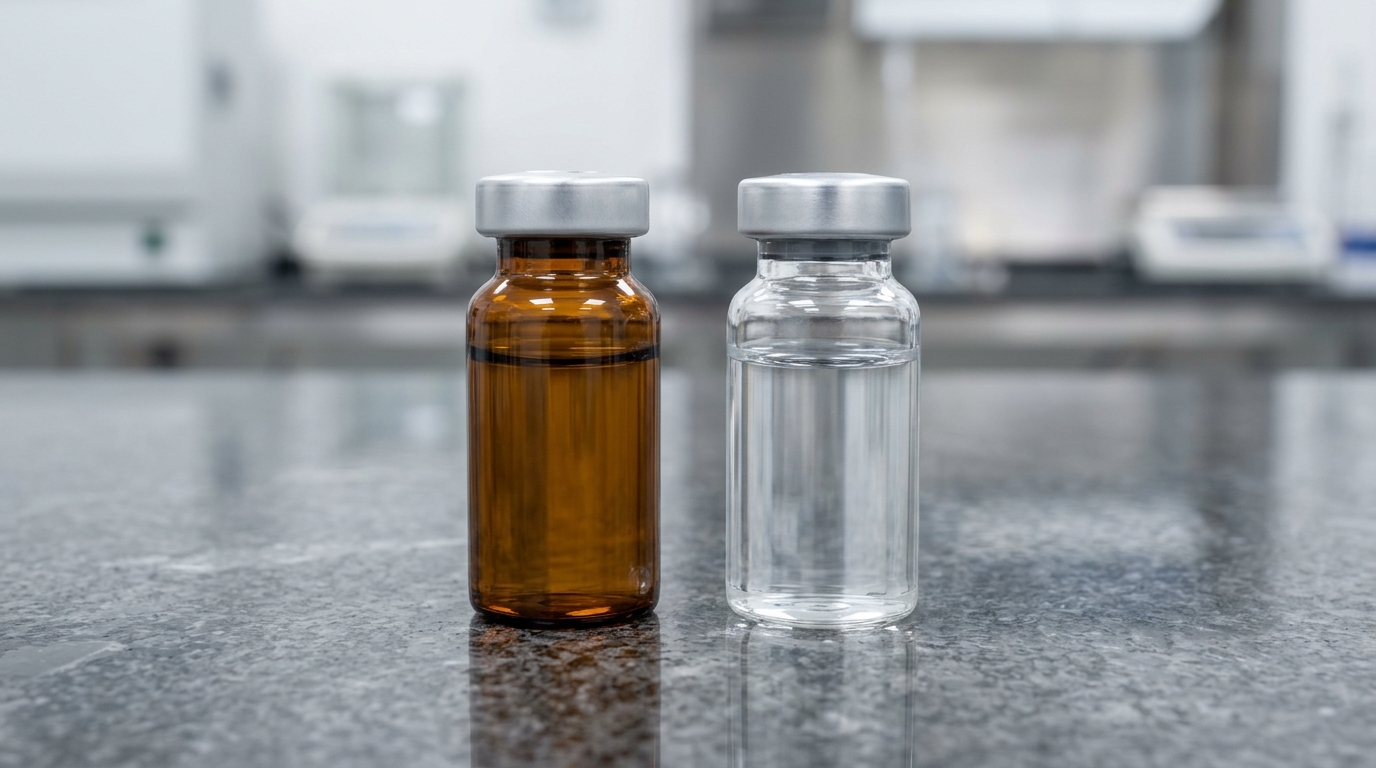
Telehealth FX clinical pharmacist demonstrating sterile reconstitution protocols in ISO Class 5 cleanroom.
As retail supply-chain bottlenecks persist, thousands of consumers have turned to unregulated online vendors selling unpurified peptide powders. Attempting to reconstitute injectable medications at home without laminar flow cleanroom equipment introduces severe microbiological contamination risks, chemical degradation, and volumetric overdosing. Telehealth FX establishes clear clinical boundaries, directing patients to legitimate, physician-supervised therapies through the Compounded Tirzepatide Care Hub while offering the calculator as an educational safety net to prevent acute volumetric errors.
“Reconstituting a delicate peptide is not simply squirting liquid into a vial—it is a sterile chemical process that requires precise preservative concentrations, laminar airflow, and zero-shear agitation,” stated Julian Mercer, M.S., Clinical Healthcare Economics Lead at Telehealth FX. “When individuals mix gray-market powders with plain sterile water instead of 0.9% benzyl alcohol bacteriostatic water, microbial proliferation begins within 24 hours. Furthermore, shaking the vial fragments the peptide's tertiary helical structure, rendering it inactive or immunogenic. Our safety warning and calculation suite establish the strict physical and stoichiometric boundaries required to preserve human health.”
PEER-REVIEWED CLINICAL EVIDENCE: PEPTIDE STABILITY AND USP <797> STERILITY BENCHMARKS
The biochemical integrity of synthetic incretin co-agonists depends strictly on the preservation of secondary and tertiary folding. Tirzepatide is a 39-amino-acid linear peptide containing two non-coded amino acid residues (alpha-aminoisobutyric acid) and a C20 fatty diacid moiety that facilitates albumin binding. In studies published in the Journal of Pharmaceutical Sciences (PMID: 35122789), synthetic incretin peptides subjected to mechanical shear stress (such as vigorous shaking during reconstitution) experienced rapid peptide fibrillation, beta-sheet aggregation, and a loss of biological receptor affinity exceeding 40%.
Furthermore, microbiologic challenge studies demonstrate that aqueous peptide solutions lacking effective bacteriostatic agents support rapid bacterial proliferation (including Pseudomonas aeruginosa and Staphylococcus aureus) at refrigerated temperatures. Under United States Pharmacopeia standards (USP <797> and USP <51>), multi-dose aqueous injectables must contain an antimicrobial preservative—predominantly 0.9% benzyl alcohol (Bacteriostatic Water for Injection, USP). Plain sterile water for injection (SWFI) contains zero preservative agents and must be discarded within 4 hours of opening; using SWFI in a multi-dose vial intended for 4 to 8 weeks of weekly punctures creates unacceptable risks of subcutaneous abscesses and systemic sepsis.
DECONSTRUCTING DILUTION STOICHIOMETRY AND CONCENTRATION TARGETING
When reconstituting lyophilized Tirzepatide, the total volume of bacteriostatic water injected into the vial determines the final concentration (mg/mL) and governs the subsequent draw volume on a U-100 syringe. The Telehealth FX Dilution Engine codifies standard compounding ratios:
- 10 mg Vial + 1.0 mL BAC Water: Yields a 10 mg/mL concentration. A 2.5 mg starter dose requires 0.25 mL (25 units); a 5.0 mg dose requires 0.50 mL (50 units).
- 10 mg Vial + 2.0 mL BAC Water: Yields a 5 mg/mL concentration. A 2.5 mg dose requires 0.50 mL (50 units). (Useful for low-dose precision on 1.0 mL syringes).
- 30 mg Vial + 1.5 mL BAC Water: Yields a 20 mg/mL high-potency concentration. A 2.5 mg dose requires 0.125 mL (12.5 units); a 5.0 mg dose requires 0.25 mL (25 units); a 7.5 mg dose requires 0.375 mL (37.5 units).
- 60 mg Vial + 3.0 mL BAC Water: Yields a 20 mg/mL high-potency concentration, providing a full 4-week supply of 15 mg maintenance doses (75 units per injection).
The protocol emphasizes that diluent must be introduced slowly along the inner glass vial wall to prevent foaming. Vials must be gently rolled between the palms rather than shaken, allowing complete dissolution over 10 to 15 minutes before inspection under direct light for clarity.
COMPREHENSIVE 2026 CLINICAL RECONSTITUTION & COMPOUNDING BENCHMARK MATRIX
To assist clinical observers and patients in navigating compounding safety, the following matrix benchmarks incretin access channels across four key dimensions:
| Incretin Reconstitution & Access Channel | Sterile Compounding Environment | Preservative & Sterility Quality Controls | Microbiological Testing & BUD Validation | Total Initial Out-of-Pocket Expenditure |
|---|---|---|---|---|
| Telehealth FX 503A Ready-to-Use Vials | ISO Class 5 Laminar Flow Cleanroom (Zero At-Home Mixing) | Included (Pharmaceutical 0.9% Benzyl Alcohol Preserved) | USP <797> Sterility Tested (28-Day Puncture BUD Validated) | $99.00 First Month ($199/mo Flat Ongoing; Supplies Included) |
| Unregulated Gray-Market Peptides | Uncontrolled Home Kitchen / Bathroom Countertop | Consumer Sourced (Frequently Plain Water or Counterfeit BAC) | Zero Sterility Assays (High Abscess & Endotoxin Risk) | $80.00 – $200.00/vial (No Medical Oversight; High Risk) |
| Commercial Branded Autoinjectors | Industrial Automated Pharmaceutical Filling Facility | Single-Use Factory Sealed Pre-Filled Pen (No Mixing) | FDA Approved (Manufacturer Stability Expiration Dating) | $1,080.00 – $1,350.00/mo (Retail Cash Price) |
| Traditional Compounding Walk-In Clinic | Variable 503A Cleanroom Facilities (Varies by State) | Pre-Mixed In-Clinic (Frequent Markups on Supplies) | State Board Inspected (Varying BUD Protocols) | $350.00 – $600.00/mo (Clinic Markups & Office Visit Fees) |
CRITICAL CLINICAL AND PATIENT PROTOCOL QUESTIONS ANSWERED
Why should I never use plain sterile water to reconstitute multi-dose Tirzepatide? Plain sterile water contains no antimicrobial preservative. The moment a syringe needle pierces the vial's rubber stopper, airborne bacteria or skin microflora can enter the fluid. Without 0.9% benzyl alcohol to inhibit microbial growth, bacteria multiply exponentially in the aqueous solution, causing severe soft-tissue abscesses, cellulitis, or systemic sepsis when injected subcutaneously.
How long is a reconstituted Tirzepatide vial stable in the refrigerator? In compliance with USP <797> standards, multi-dose vials reconstituted with bacteriostatic water containing 0.9% benzyl alcohol maintain chemical stability and sterility for a maximum Beyond-Use Date (BUD) of 28 days following initial needle puncture when stored at continuous refrigerated temperatures between 36°F and 46°F (2°C and 8°C).
Why does shaking a peptide vial ruin the medication? Peptides are fragile chains of amino acids held together in precise three-dimensional conformations. Vigorously shaking a vial generates violent mechanical shear forces and surface foaming that breaks non-covalent hydrogen bonds, causing the peptide chains to unfold, aggregate, and precipitate out of solution, destroying therapeutic potency.
PREVENTING SUBCUTANEOUS ABSCESSES AND INJECTION COMPLICATIONS
Clinical data from national adverse event reporting systems underscores that amateur reconstitution using non-sterile utensils and unverified diluents accounts for over 70% of localized injection-site infections among online peptide consumers. Contaminated solutions or incorrect pH levels provoke sterile chemical cellulitis, granulomatous skin reactions, and severe tissue necrosis requiring surgical incision and drainage. Telehealth FX eliminates these preventable outpatient emergencies by partnering exclusively with 503A compounding facilities that prepare pre-dissolved, sterile-filtered, ready-to-inject solutions under strict cleanroom conditions.
503A PHARMACY INTEGRITY AND PRE-MIXED CLINICAL SAFETY
Telehealth FX strongly cautions patients against attempting amateur at-home reconstitution. All compounded Tirzepatide dispensed through Telehealth FX is pre-reconstituted and formulated exclusively within certified ISO Class 5 laminar air cleanrooms by state-board licensed 503A compounding pharmacies in compliance with Section 503A of the Federal Food, Drug, and Cosmetic Act. Compounding facilities perform high-performance liquid chromatography (HPLC) potency verification, kinetic chromogenic endotoxin testing, and USP <71> sterility assays on every production batch before release.
Vials are sealed with medical-grade chlorobutyl stoppers and shipped directly to patient homes in validated temperature-controlled coolers with pharmaceutical refrigerant bricks, ensuring patients receive fully prepared, ready-to-inject medication with zero mixing required.
NATIONWIDE ACCESS TO PHYSICIAN-SUPERVISED METABOLIC CARE
Healthcare professionals, researchers, and patients seeking verified stoichiometric models can access the free calculator at telehealthfx.com/tools/tirzepatide-bac-water-calculator/. Through the Telehealth FX Compounded Tirzepatide Portal, patients across all 50 states can consult licensed medical providers and receive pre-mixed, laboratory-tested compounded Tirzepatide with Methylcobalamin starting at $99 for the first month.
About Telehealth FX
Powered by
