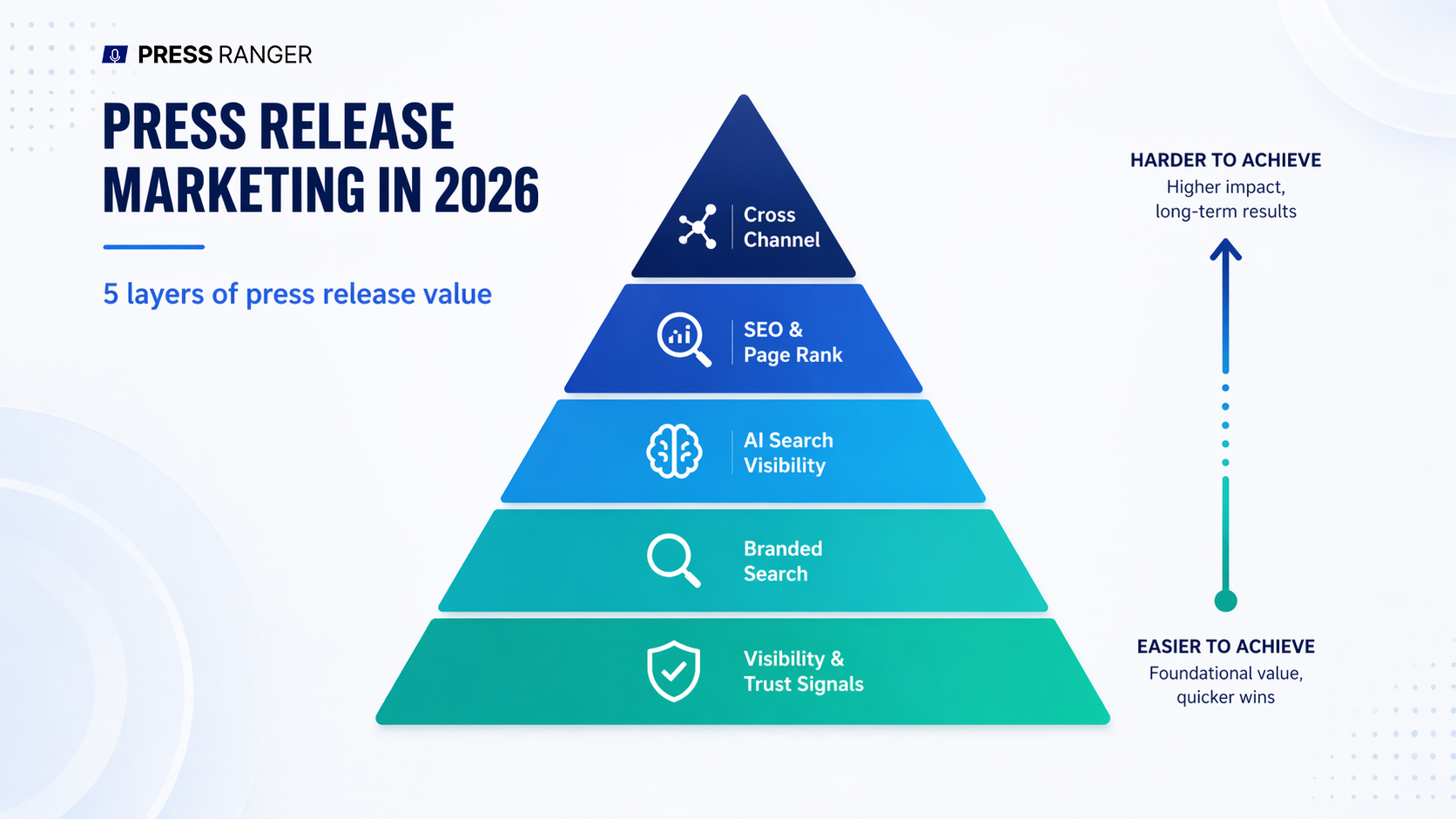
What is Press Release Marketing? Full 2026 guide.
Press releases aren't dead—they're misunderstood. Learn why press release marketing fails for most companies and how to use it correctly for SEO, brand authority, and AI search visibility.
Unlock the future of search. Learn Answer Engine Optimization (AEO) to make your content the source for AI answers and stay ahead of the curve.


Picture this: you ask a question, and instead of getting a long list of links you have to sift through, you get a direct, complete answer. That world isn’t coming; it’s already here. We're witnessing a massive shift from old-school search engines to new AI-powered answer engines, and it's permanently changing how people get information online.
For years, the whole game of search was about finding the best webpage. We’d type in a few keywords, and Google would serve up its classic list of blue links. It was then our job to click, read, and piece together the answer. The entire field of traditional SEO was built around winning that game—ranking your webpage higher than everyone else's.
Think of it like a librarian handing you a detailed card catalog. It points you to the right books, but you still have to pull them off the shelf and do the reading yourself.
Now, tools like ChatGPT, Perplexity, and Google's own AI Overviews are tearing up that old model. They don't act like a card catalog; they act like a brilliant research assistant who reads all the relevant books for you and hands you a perfect, concise summary. This is the new reality of answer engine optimization. The move from search to answers is being supercharged by new AI SEO strategies leveraging large language models that power these systems.
This isn't some passing fad. It's a fundamental change in what users expect. People now want instant, conversational answers without the hassle of clicking through a dozen different websites. For any business or content creator, the implications are huge.
Your audience is increasingly getting answers straight from an AI, which often means they never even visit your website. Your strategy has to change from simply ranking a webpage to becoming the trusted source for the AI itself.
The goal is no longer just to land on the first page of Google. The new prize is having your facts, your data, and your brand's expertise featured directly within the AI-generated answer. This new environment is defined by a few key traits:
Getting your head around this shift is the first, most critical step. It’s no longer enough for your content to be findable; it has to be citable. This simple idea sets the stage for a completely new way of thinking about content in the age of AI-powered answers.
Let's break down what Answer Engine Optimization (AEO) really means in practice. It's the process of fine-tuning your content so that AI models—the brains behind tools like ChatGPT and Google's AI Overviews—can easily find, understand, and cite it when answering a user's question. This isn't just about getting your webpage to rank high anymore. The goal now is to become the go-to, citable source for the AI itself.
Think of it this way: traditional SEO is like writing a fantastic book and hoping people discover it on a crowded bookstore shelf. AEO, however, is more like getting your key insights published in the definitive encyclopedia that every researcher consults first.
When an AI like Perplexity or ChatGPT cites your content, it’s a massive vote of confidence. This positions your brand as a genuine expert, builds trust with users, and sends highly qualified, ready-to-engage traffic your way.
The incredible speed at which people are adopting these platforms makes AEO an essential part of any forward-thinking digital strategy. Answer engines are already handling hundreds of millions of queries every single day. Just look at Perplexity—data shows it has maintained quarterly user growth between 27% and 34%, a clear sign that users are flocking to these new tools.
This trend is something you simply can't ignore. It directly affects your brand's visibility and authority online. As more and more people turn to AI for quick, reliable answers, your content must be structured to show up in those responses. If it's not, you're essentially invisible to a huge and growing part of your audience.
The core idea behind AEO is simple: Don't just write for people; write for the machines that talk to people. This means making your content scannable, fact-based, and easy for an algorithm to parse and trust.
Shifting your focus to AEO brings real, measurable benefits that often go beyond standard traffic metrics. In this new search landscape, it's a powerful way to increase your online presence and get your expertise directly in front of users.
Here’s what you stand to gain:
Ultimately, AEO is about adapting to a fundamental shift in how people access information. For a more detailed look at the nuts and bolts, check out our complete guide on what is answer engine optimization and how to put it into action. By optimizing for answers, you make sure your brand’s voice is a prominent one in this new era of conversational AI.
While Answer Engine Optimization (AEO) has its roots in classic search principles, it's a mistake to think of it as just "the next version of SEO." They operate with fundamentally different goals and tactics. To really get a handle on what makes AEO unique, it helps to first understand the foundational SEO strategies that brought us here.
Traditional SEO is all about winning a high rank on a search engine results page (SERP). The game is about visibility—using keywords and backlinks to get your webpage seen and earn a click from a human user.
AEO plays a different game entirely. The goal isn't just to be found; it's to become the direct source of truth for the answer engine itself. You're aiming for your content to be consumed, understood, and presented by an AI as a verifiable fact, often with a citation pointing back to you.
This is where the biggest distinction lies. SEO content is often built around keyword targets and long-form articles designed to cover a topic from every angle. Answer engine optimization, however, demands something more precise: clear, concise, and fact-based snippets that directly answer a specific question. It values semantic richness and structured data far more than simple keyword repetition.
Think about how people search now. They don't just type "running shoes." They ask, "what are the best running shoes for flat feet under $100?" This trend is a huge driver behind the need for AEO.
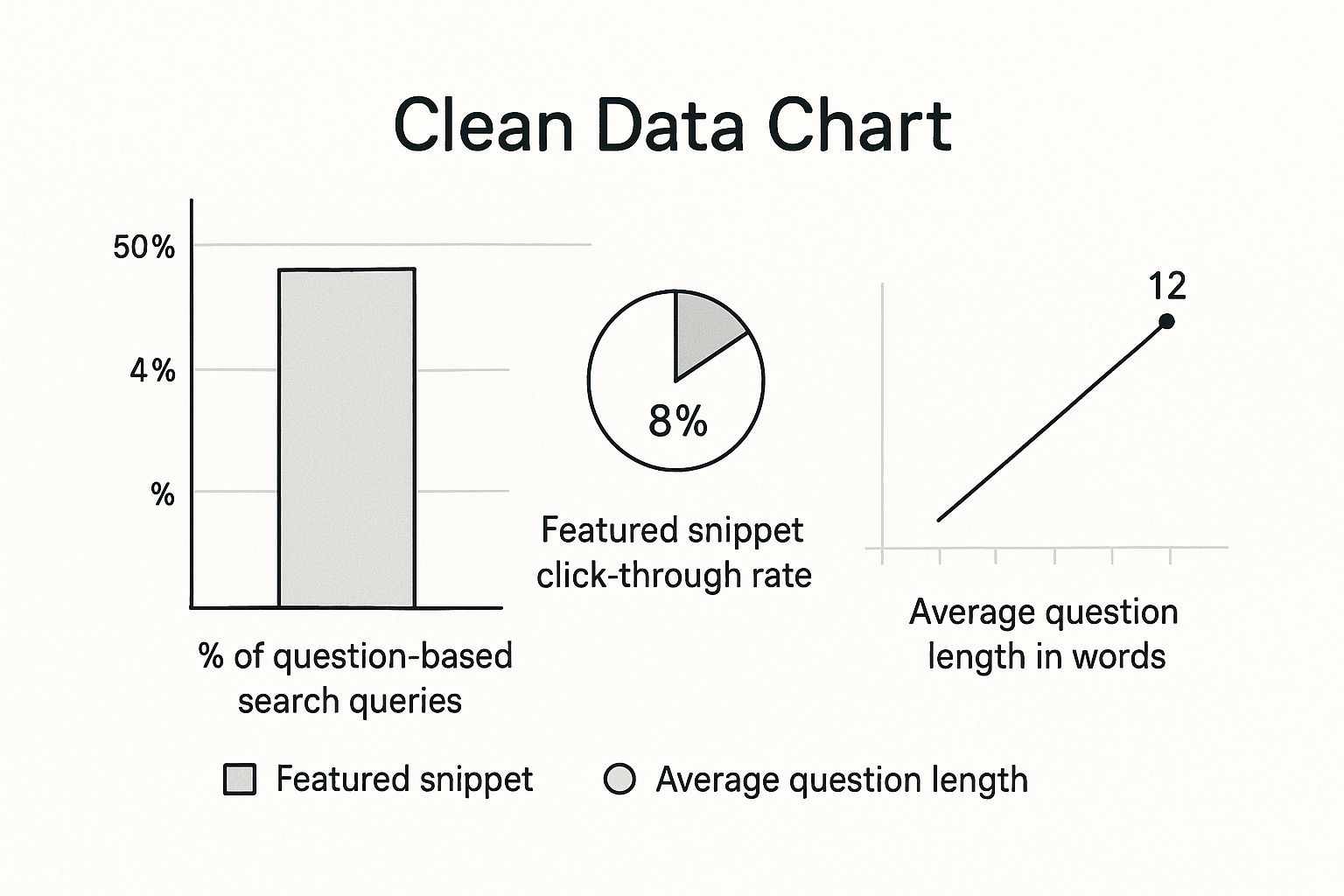
As you can see, a massive chunk of modern searches are framed as direct questions, which makes content that provides direct answers incredibly valuable.
This fundamental difference in purpose changes everything, right down to your technical priorities. While backlinks are still important for establishing your site's overall authority, AEO places a much heavier emphasis on Schema markup and other forms of structured data. This markup acts like a clear, standardized label, helping the AI quickly understand the context of your content and verify its accuracy.
To help clarify these differences, let's put them side-by-side.
The following table breaks down the key distinctions between these two disciplines, from their primary objectives to the metrics that define success.
| Aspect | Traditional SEO | Answer Engine Optimization (AEO) |
|---|---|---|
| Primary Goal | Rank high on a SERP to earn a click. | Become the cited source in an AI-generated answer. |
| Content Focus | Broad, keyword-driven articles and pages. | Concise, fact-based answers to specific questions. |
| Key Tactic | On-page optimization, keyword density, backlink building. | Structured data, semantic richness, factual accuracy. |
| Target Audience | A human user scanning a list of blue links. | An AI model looking for verifiable information. |
| Success Metric | Organic traffic, keyword rankings, click-through rate (CTR). | Citations, brand mentions in AI answers, visibility in answer carousels. |
As the table shows, while both aim for visibility, the path to achieving it—and what you're trying to achieve—is fundamentally different.
AEO isn't about replacing SEO. It’s an evolution. For a deeper look into how these AI-driven systems work, you might be interested in learning more about what generative engine optimization is. Understanding these core differences is the first step toward building a hybrid strategy that wins in both the classic search results and the new frontier of AI-generated answers.
Let's be clear: getting results with answer engines isn't about throwing spaghetti at the wall and seeing what sticks. It's a methodical process. Think of it like building a house—you can't just start nailing boards together. You need a solid blueprint. This framework is your blueprint for building content that AI-powered search consistently chooses as the best answer.
This process isn't nearly as complex as it might sound. At its heart, it’s about systematically aligning your content with how both people and AI models look for information. When you follow these core steps, answer engine optimization stops being some abstract concept and becomes a practical strategy that drives real results.
The first—and most critical—step is getting inside your audience's head to figure out what they’re actually asking. AEO always begins with the query. You aren't just looking for keywords; you're hunting for the specific problems, curiosities, and needs that lead someone to ask an AI for help in the first place.
Your mission here is to build a master list of questions your customers and potential customers have throughout their entire journey with you.
Don't rush this discovery phase. It’s the foundation for everything that follows. Every piece of content you create from this point forward should be a direct response to one of these questions.
Okay, so you know what people are asking. Now you have to provide the absolute best answer. This is where content creation comes in, but with a very specific AEO twist. Your answers need to be crystal clear, fact-based, and organized exceptionally well.
Remember, you're writing for an AI that craves clarity and verifiable facts. Vague claims, fluffy language, and disorganized text will get your content completely ignored. It needs to be structured as a direct solution.
To create content that AI will see as authoritative, stick to these principles:
Having a great answer is only half the battle. You also need to make it incredibly easy for AI to find and understand it. This is where the technical side of AEO, particularly Schema markup, comes into play. Think of Schema as a set of labels you put on your content that tells search engines and AI models exactly what each piece of information is.
For instance, you can use specific schema types to clearly identify things like:
Putting these technical elements in place helps an AI model trust your content because you’ve removed all ambiguity. It signals that your site is a reliable source of well-structured information, making you a prime candidate for a citation in an AI-generated answer.
A solid Answer Engine Optimization strategy isn't built on guesswork. It runs on a specific set of tools designed to uncover the right questions, structure your content effectively, and measure what’s actually working. Without the right software, AEO is just a complex theory; with it, it becomes a practical, data-driven process.
Think of your toolkit as covering three core areas: finding what people are asking, setting up your content technically, and keeping an eye on your performance. Interestingly, many of these overlap with digital outreach, much like the software you'd find in guides covering the best tools for public relations.
First things first, you have to know what questions your audience is actually asking. This is the bedrock of AEO. The right tools help you dig deeper than basic keyword research and tap into the conversational queries that power modern answer engines.
Once you've created your answer-focused content, you need to make sure AI models can understand it. You also need to track whether you’re showing up in their responses. This is where technical precision and sharp analytics come into play.
You can write the most brilliant answer in the world, but if it's not technically sound, it will get lost. Schema markup and performance tracking are non-negotiable for any serious AEO strategy.
Getting this right means you can earn a direct citation in an answer, positioning your site as the go-to source. Just look at how an answer engine like Perplexity cites its sources directly in the response.

This screenshot shows the ultimate goal of AEO in action. Earning that numbered citation establishes your site as a trusted authority and, more importantly, drives highly qualified referral traffic directly to you.
https://www.youtube.com/embed/N1F1t76s99o
It’s one thing to talk about theory, but seeing how Answer Engine Optimization plays out in the real world is where it all clicks. Let's look at how actual businesses are getting incredible results by shifting their focus from traditional SEO to an answer-first approach. These stories aren't just hypotheticals; they're a blueprint for what’s possible.
Take a niche SaaS company that sells project management software. They had a classic problem: their ideal customers were asking very specific questions online about automating workflows, but the company's content wasn't showing up. Instead, they were being beaten by big, generic tech blogs.
So, they switched gears with a brilliant AEO strategy. They built out a comprehensive library of content where every single piece was designed to solve a specific problem or answer a direct question. They then used structured data like FAQPage and HowTo schema to give AI models clear, easy-to-read signposts.
The results were phenomenal. In just a few months, their brand started getting cited as the source in AI-generated answers for queries like, "what's the best way to automate team status updates?" This led to a 35% increase in high-quality referral traffic and cemented their reputation as the experts in their small but valuable niche.
Here’s another great example, this time from a local plumbing company. The owner noticed a huge shift in customer behavior—more and more people were using voice assistants like Alexa and Siri for urgent needs. They weren't typing "plumbers near me" anymore; they were saying, "Hey Google, who can fix a leaking pipe right now?" Their old website was completely invisible to these kinds of conversational searches.
The key insight was that voice search is inherently answer-driven. The user wants one reliable answer, not a list of ten options.
Their AEO game plan was simple but incredibly effective:
This targeted strategy paid off big time. The company now dominates local voice search results for plumbing emergencies. They reported a massive 50% increase in calls that came directly from voice searches, connecting them with customers at the precise moment they needed help.
These stories prove that AEO isn't some far-off concept. It's a practical, powerful strategy that’s driving real growth for businesses today.
Jumping into a new field like Answer Engine Optimization always brings up a lot of questions. As marketers and brands start wrapping their heads around AEO, a few common ones keep popping up. Let's tackle them head-on so you can move forward with a clearer picture.
The biggest question on everyone's mind: Is AEO going to kill traditional SEO? The simple answer is no. They’re just different tools for different jobs. SEO is still your go-to for ranking in the classic blue-link search results, building broad brand awareness, and strengthening your overall domain authority. AEO, on the other hand, is a precision strike—it’s all about getting your brand directly cited in AI-generated answers. A smart strategy uses both.
Naturally, the next question is about tracking your results. With AEO, we're not just looking at the familiar SEO metrics like keyword rankings and organic traffic. We have to look through a new lens.
Success in AEO is measured by a different set of KPIs:
This forces a shift in how we think about what "performance" really means.
It's not just about asking, "how much traffic did we get?" The real question becomes, "how much authority did we build?" Being the trusted, cited source is a massive signal of credibility that pays off long after the initial click.
Not at all. While the big players certainly have the budgets to go all-in, AEO creates a fantastic opening for smaller, specialized businesses. Think about it: by laser-focusing on hyper-specific questions within your niche, a small brand can become the definitive authority. That's a much tougher hill to climb in the crowded, competitive world of broad-stroke SEO.
The need to adapt isn't some far-off idea; it's happening now. The research firm Gartner predicts a staggering 25% drop in traffic from traditional search engines by 2026 because more people will turn to AI for answers. Yet, only about 32% of enterprise marketers feel they can even figure out why their brand isn't showing up in AI results. You can read the full analysis on this market shift to dig into the numbers. This disconnect is a golden opportunity for agile businesses—regardless of size—to pull ahead of the curve.
Ready to make sure your brand's expertise is heard in the new era of AI answers? Press Ranger uses AI to connect your knowledge with the right journalists and publishers. Our platform is built to help you earn the authority and credibility you need to become a go-to source for answer engines. Let's make some headlines together at Press Ranger.
Press releases aren't dead—they're misunderstood. Learn why press release marketing fails for most companies and how to use it correctly for SEO, brand authority, and AI search visibility.

We're excited to announce the launch of the Press Ranger Blog. PR is changing fast and we want to make it move even faster. There are 10,000+ businesses using Press Ranger to manage PR campaig...
Learn how to write a good press release that gets media coverage. Our guide offers expert tips, proven formats, and real-world examples to boost your brand.