
Introducing AIWire
The future of PR isn't just about being seen by humans—it's about being referenced by AI.
Unlock authority with our guide to digital PR link building. Learn proven strategies for creating newsworthy content and securing high-value media placements.


Digital PR link building isn't just another SEO tactic; it's a strategic approach to earning high-quality backlinks by becoming the story. The whole idea is to create genuinely newsworthy content—data studies, expert insights, compelling stories—that top-tier journalists and major publications actually want to talk about.
It represents a major shift in thinking. We're moving away from the old-school obsession with link volume and focusing instead on brand-building link quality. This approach builds the kind of authority and trust that directly and powerfully influences your search rankings. In short, it turns your brand into a credible source that earns powerful, editorially given links.
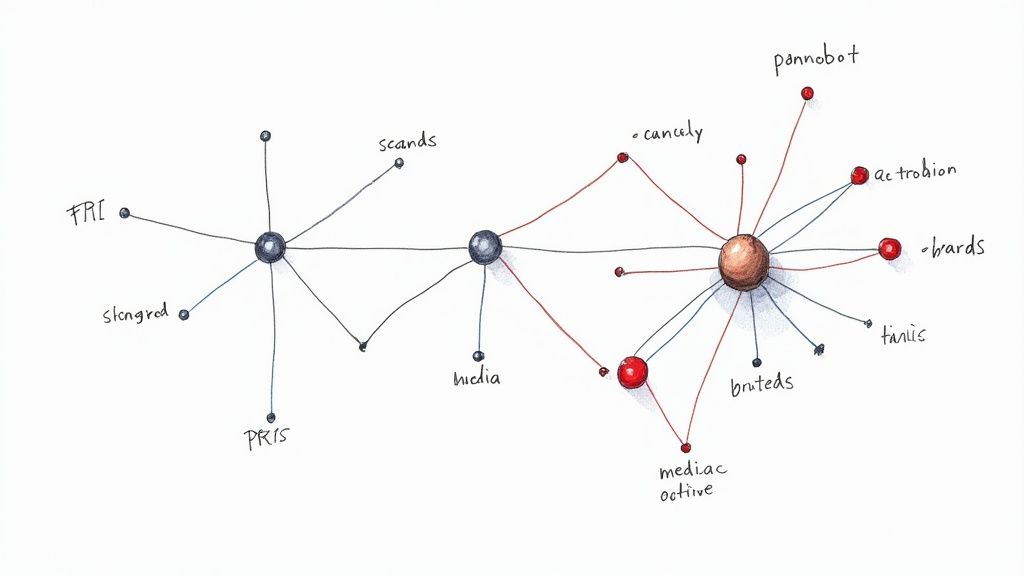
Let's be honest, the days of successfully chasing hundreds of low-value links are long gone. Today, the SEO game is won through authority, and that’s precisely where digital PR link building comes into its own. It’s less about trying to game search algorithms and more about building a genuine brand narrative that earns media attention on its own merits.
This isn't just a new name for guest posting or directory submissions. We're talking about a strategic fusion of public relations and SEO, designed to put your brand in front of massive, relevant audiences while securing the exact kind of backlinks that search engines like Google value most.
The core difference between digital PR and more traditional link building methods really boils down to this quality-first mindset.
With digital PR, the entire strategy is geared toward securing a handful of placements from highly authoritative and reputable outlets—think names like Forbes, The Guardian, or TechCrunch. From my experience, a single backlink from a publication like The New York Times can have a much bigger impact on your SEO than hundreds of links scraped together from small, unknown blogs.
Think of it this way: one mention in a major national publication is a massive vote of confidence. It signals to both search engines and potential customers that your brand is a legitimate, authoritative voice in your field. That kind of third-party endorsement is something you simply can't replicate with volume alone.
Expert Insight: A well-executed digital PR strategy does more than just boost SEO; it provides a layer of algorithmic protection. When you have a portfolio of earned, high-authority links, your site becomes far more resilient to the volatility of Google's algorithm updates.
To make the distinction clearer, here's a quick breakdown of how these two approaches stack up.
This table highlights the fundamental differences in strategy and outcomes between modern digital PR and older link building tactics.
| Attribute | Digital PR Link Building | Traditional Link Building |
|---|---|---|
| Primary Goal | Earn high-authority links, build brand credibility, and drive referral traffic. | Acquire a high volume of backlinks to improve domain metrics. |
| Core Tactic | Creating newsworthy content (data, stories, expert commentary) for media outreach. | Guest posting, directory submissions, and link exchanges. |
| Link Source | Top-tier news sites, industry journals, and authoritative publications. | General blogs, web 2.0s, and directories, often with lower authority. |
| Success Metric | Quality and authority of linking domains, brand mentions, and referral traffic. | The total number of links acquired and changes in Domain Authority/Rating. |
| Timeframe | Longer-term strategy focused on building sustainable brand authority. | Often focused on short-term gains and ranking boosts. |
As you can see, while both aim to get links, their philosophies and the value they deliver are worlds apart. Digital PR is playing the long game for more significant, more stable rewards.
While getting powerful backlinks is often the main objective, the real beauty of digital PR link building is that its benefits ripple across your entire marketing ecosystem. A single successful campaign delivers value far beyond just SEO metrics.
Here's what I mean:
These benefits create a powerful, self-reinforcing growth loop. The more your brand is mentioned, the more authority you build. That authority leads to better search rankings, which drives more organic traffic and, in turn, creates even more visibility. To see how these elements can work together, you can explore our guide on 10 essential digital PR strategies for 2025 for a deeper dive.
A winning digital PR link building campaign starts long before you ever hit "send" on an outreach email. The truth is, the most successful projects are built on a solid foundation of clear goals, smart competitor analysis, and a genuinely interesting story. If you skip this prep work, you’re basically trying to build a house on sand—it’s just not going to hold up.
This is the stage where you stop thinking in vague terms like "get more links" and start defining what success actually looks like. Vague goals get you vague results. It’s time to get specific and tie your efforts to real business outcomes.
So, what does a "win" really mean for this campaign? Is it all about collecting links from top-tier publications? Or are you trying to drive tangible business results, like traffic and leads? Nailing this down from the get-go is non-negotiable.
Here are a few concrete objectives you might consider:
Setting these clear KPIs not only helps you measure success later but also keeps your entire team focused during the creative and outreach process.
Pro Tip: Your campaign objectives dictate your entire strategy. If your main goal is to land a feature in Forbes, your approach will look completely different than if you're trying to secure 20 links from mid-tier industry blogs.
This kind of strategic thinking has become absolutely essential in modern SEO. In fact, the industry's reliance on digital PR for links is only growing. A recent survey found that 73% of link builders plan to use digital PR as a primary tactic in 2025. What's more, 87% of SEO professionals agree that digital PR is a crucial part of their link building efforts. You can explore the full link building survey results on fatjoe.com to see just how central this has become.
Your competitors are a goldmine of information. By digging into their PR wins and backlink profiles, you can see what’s resonating with journalists, spot content gaps, and uncover fresh story angles for your own brand. This isn’t about copying what they did; it's about learning from their wins and their misses.
Start by asking a few key questions:
Let's say you run a sustainable fashion brand. You might find that your biggest competitor landed links from top lifestyle blogs by publishing a data report on the environmental cost of fast fashion. Right there, you’ve learned that data-driven stories work well in your space. That’s a proven concept you can build on.
With your goals set and your competitor research in hand, it’s time for the fun part: brainstorming a linkable asset. This is the piece of content that will anchor your entire campaign. It has to be something that provides real value and, frankly, makes a journalist's job easier.
This visual breaks down the flow from research to the ultimate goal: earning high-quality links.
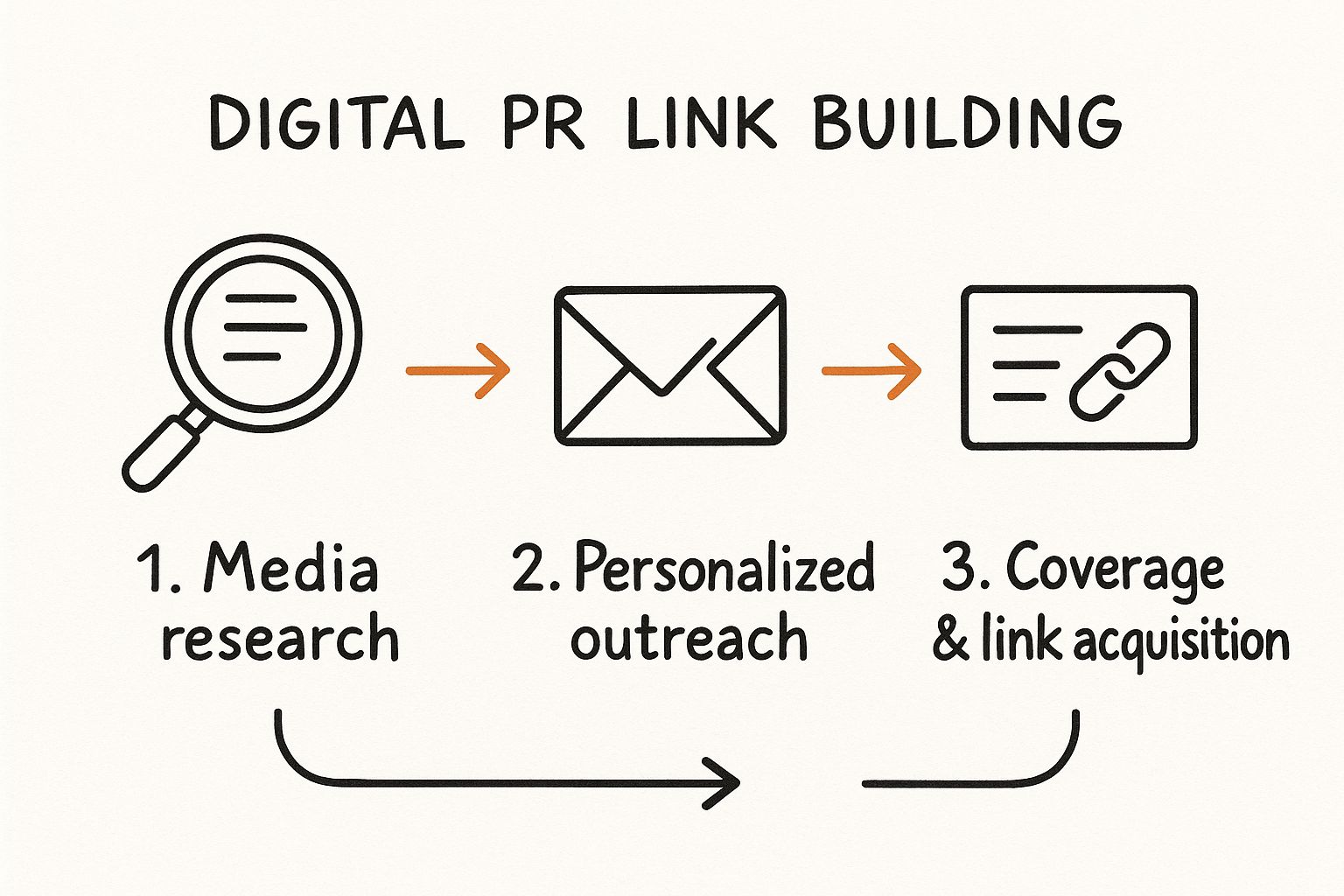
As the infographic shows, every great campaign follows a logical path, starting with solid research and ending with earned media coverage that drives results.
A powerful linkable asset is something a journalist can easily reference, quote, or embed in their own article. Forget about self-promotional fluff. Your content needs to be:
The most successful linkable assets are often original data studies, insightful industry reports, or useful interactive tools. By putting in this foundational work, you’re setting the stage for a digital PR link building campaign that doesn’t just earn links but builds real, lasting brand authority.
You’ve laid the groundwork, but now we’re at the heart of any successful digital PR link building campaign: creating a story so compelling that journalists feel they have to cover it. This is where sharp strategy meets pure creativity.
Your job is to build a "linkable asset"—a piece of content so genuinely valuable that publications will link back to you as the source without a second thought.
Forget about thinly veiled sales pitches or self-promotional fluff. Journalists aren’t here to give you free advertising. They're hunting for unique, newsworthy stories that will hook their readers. Your content needs to solve a real problem, answer a nagging question, or reveal a truly surprising insight.
In the world of digital PR, original data is gold. When you can hand a journalist a fresh statistic or an exclusive trend they can't get anywhere else, you instantly become an invaluable resource. This is more achievable than it sounds; you don’t need a massive research budget.
There are two main ways to generate data that gets attention:
Audience Surveys: Polling a specific demographic can produce some fascinating and often counterintuitive results. Imagine a pet food company surveys 1,000 dog owners about their spending habits. A headline like, "Study Finds Americans Spend $500 More on Their Dog Each Year Than Their Own Vacation" is an instant, clickable story.
Public Datasets: Government agencies, universities, and NGOs regularly publish massive troves of public data. It's often dense and impenetrable. Your role is to be the interpreter who finds the story buried inside. A real estate tech company, for example, could sift through census data to create a piece on "The Top 10 Most Affordable Cities for Gen Z Homebuyers."
The real secret is finding the narrative hook. What's the most shocking or unexpected finding? Lead with that. You aren't just presenting numbers; you're telling the story the numbers support.
Once you have your core story, you need to package it for media consumption. Journalists are under constant deadline pressure. Your content must be incredibly easy to understand and even easier for them to write about. This starts with creating a central content piece on your website—the definitive home for your campaign.
This asset should be well-designed, clearly written, and visually engaging. Think of it as the canonical source that all coverage will link back to, so it has to look and feel authoritative. If you're looking for inspiration, reviewing some powerful press release examples can show you how experts frame their stories for maximum impact.
A rookie mistake is thinking PR is about hyping up a new product feature. Unless that feature is genuinely revolutionary, it’s rarely newsworthy. A much smarter approach is to position your brand as an expert commentator on a broader industry trend. That’s how you earn trust and high-quality links.
This is your chance to frame the narrative. Don't just dump the data on the page. Guide the reader with strong headlines, pull quotes, and clear data visualizations that spotlight the most important takeaways.
The format you choose for your linkable asset can make or break its success. Different content types resonate with different kinds of publications. Picking the right one is a strategic decision that can dramatically expand your campaign's reach.
Here's a quick look at some formats that consistently deliver results.
| Content Format | Primary Goal | Best For |
|---|---|---|
| Data Study/Report | To establish authority by presenting new, proprietary research and statistics. | News outlets, industry publications, and business journals that crave data-backed stories. |
| Infographic | To simplify a complex topic or visualize data in an engaging, shareable format. | Lifestyle blogs, social media, and publications looking for easily embeddable visual content. |
| Interactive Map/Tool | To provide a personalized, useful experience that answers a user's specific question. | Regional news outlets, travel sites, and any publication focused on user-centric content. |
| Expert Commentary | To offer a unique, authoritative perspective on a trending news topic. | Fast-paced news cycles where journalists need an expert quote on a tight deadline. |
Each of these formats serves a different purpose, but they all share a common goal: to make a journalist's job easier while positioning you as a credible expert.
In a sea of text, great visuals are a lifeline. A sharp infographic or a set of clean charts can make your data more digestible and exponentially increase its shareability. Journalists love visuals because they make their articles better and keep readers engaged.
When creating your visuals, stick to these core principles:
By combining a strong story, unique data, and compelling visuals, you create an irresistible package for the media. This strategic approach is the engine that drives every successful digital PR link building campaign, turning your brand from just another company into a source that journalists trust and audiences remember.
Even the most brilliant content will collect dust without a smart outreach plan. This is where your meticulously crafted story meets the real world—and the crowded inbox of a journalist. Success in digital pr link building hinges entirely on getting your asset in front of the right people, at the right time, with the right message.
This isn't a numbers game of blasting a generic email to a thousand random contacts. Effective outreach is about precision, personalization, and persistence. It’s about building genuine connections and framing your content as a valuable story that serves a journalist’s audience, not just your own SEO goals.
Your first move? Build a media list that is all quality, no fluff. Your goal is to pinpoint the specific journalists, editors, and influencers who have a proven history of covering topics directly related to your campaign's core story.
A great starting point is to look at who linked to your competitors for similar content. Who wrote those articles? Add them to your list. From there, you can use media databases or even just advanced Google searches to find journalists who consistently write about your "beat" or niche.
Don't just stop at a name and an email. For each contact, dig a little deeper and note:
This groundwork transforms your outreach from a cold call into a warm introduction. Suddenly, you’re not just another email; you're a helpful source who has done their homework and gets what the journalist actually cares about.
Journalists wade through dozens, if not hundreds, of pitches every single day. Yours has to grab their attention immediately. The secret is to be concise, compelling, and completely focused on their needs. A perfect pitch isn't about you; it’s about the killer story you’re offering them.
Your email must lead with your most newsworthy finding. Don’t bury the lede.
Expert Takeaway: Your subject line is 90% of the battle. It needs to be irresistible and crystal clear. Instead of a bland "New Study Available," try something like, "Data: 75% of Remote Workers Skip Lunch to Finish Early." It immediately presents a clear, intriguing story.
Keep the body of your email incredibly brief. Introduce the core finding, quickly explain why it’s relevant to their audience, and provide a direct link to your full linkable asset. Personalization is absolutely non-negotiable here. Mention a recent article they wrote that you genuinely enjoyed—it proves you’re a real reader, not a robot. To truly elevate your approach, you can learn more about how to pitch the media and land coverage in our detailed guide.
This intense focus on relevance is paramount. Industry data shows that nearly 89% of link builders see link relevance as crucial for success. And when it comes to judging the quality of those earned links, 67% of SEOs prioritize the organic traffic of the linking site. This shows the real goal is to get placements that drive actual audiences, not just to check a box. You can read more about these link building statistics to see how the industry is laser-focused on quality.
When you send your pitch can be just as important as what’s inside. Firing off emails late on a Friday afternoon or first thing Monday morning is a recipe for getting lost in the flood. The sweet spot is often mid-morning during the week, from Tuesday to Thursday.
And if you don't hear back, don't just give up. A polite, value-added follow-up is perfectly acceptable and often expected.
A Simple Follow-Up Framework
Ultimately, mastering your outreach strategy comes down to empathy. When you understand a journalist's needs and pressures, you can position your digital pr link building campaign for success, earning the kind of high-quality, authoritative backlinks that build lasting brand value.
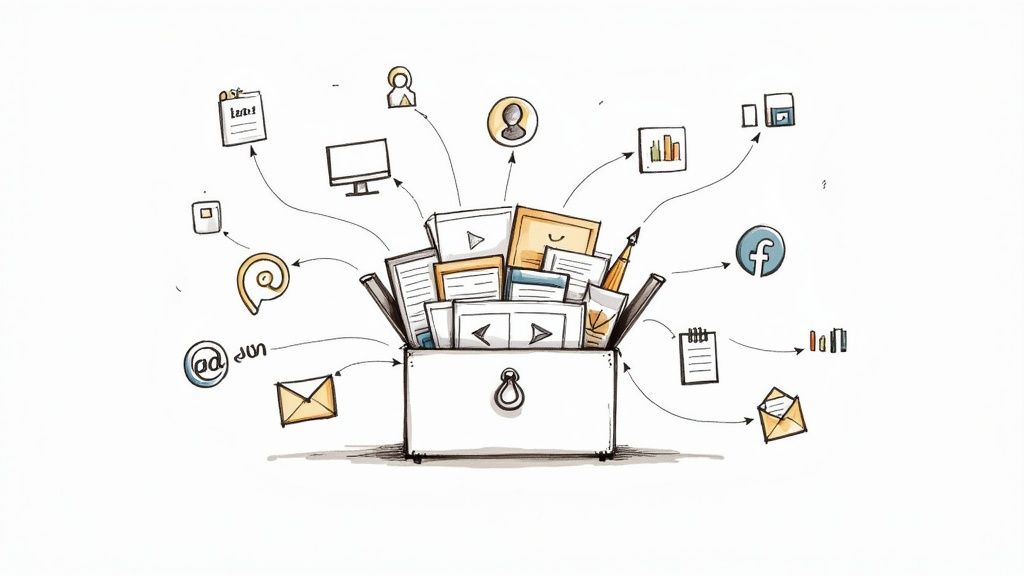
So, you’ve launched your campaign, and the placements are starting to trickle in. Great! But the work isn't done. Honestly, securing the coverage is only half the battle. Now you have to prove it was all worth it.
To show a real return on investment, you need to look beyond a simple link count. We're talking about weaving a story that connects your digital PR wins to tangible business growth. This means blending hard SEO data with brand awareness signals and, ultimately, bottom-line results. It’s this complete picture that will get your stakeholders to sit up and take notice.
The most immediate and direct way to gauge success is by looking at the SEO key performance indicators (KPIs). These metrics are your direct line between a press hit and your website's search performance. You'll be spending a lot of time in tools like Ahrefs, Semrush, and Google Search Console.
Here’s what you should be laser-focused on:
These metrics are the foundation of your report. They draw a straight line from your media placements to your SEO gains. Of course, a huge part of this is making sure those links are high-quality in the first place, and our full guide can show you how to build backlinks naturally.
A stellar campaign does more than just boost your search rankings—it builds your brand and drives real business. These are the metrics that resonate with the C-suite and show how your work impacts the entire company.
Let's be real: this stuff isn't cheap. Marketers often pour around 28% of their entire budget into link building. With nearly 46% of SEOs spending over $10,000 a year on it, you absolutely have to justify that spend. The good news? Over 78% report the investment is worthwhile when measured correctly.
To capture the full picture, you must measure how your digital PR efforts influence brand perception and audience engagement. This is where you connect your campaign to bottom-line results that resonate with the entire business, not just the SEO team.
To paint that full picture, expand your reporting to cover these areas:
By combining hard SEO data with these broader business metrics, you’re no longer just talking about links. You’re telling a powerful story about building brand authority, driving qualified traffic, and making a real contribution to the company’s bottom line.
Once you get the hang of the strategy—the content, the outreach, the follow-up—the practical questions start to surface. It's one thing to understand the theory, but what happens when the rubber meets the road?
This is where we get into the nitty-gritty. Let's tackle some of the most common questions we hear from people who are ready to make a real investment in earning media and building powerful links.
This is the big one, isn't it? The honest-to-goodness answer is: it depends entirely on your ambition. There’s no standard rate card for creativity and media relationships.
A simple, one-off campaign built around a single piece of content with a tight, targeted outreach list might run you a few thousand dollars. On the other hand, if you're looking for a comprehensive, ongoing partnership with an agency that involves deep data dives, multiple content formats, and relentless media relations, you could be looking at tens of thousands per month.
The best way to figure this out is to work backward from what you want to achieve.
Expert Tip: Don't start by asking, "What does it cost?" Instead, ask, "What does success look like for us?" Is your goal a single feature in a dream publication like Forbes, or is it to land 15 links from industry blogs with a DR of 60 or higher? Your budget is just a reflection of that goal.
You have to play the long game here. While a bit of luck might land you a few quick wins right out of the gate, the real, needle-moving SEO value takes time to accumulate. This isn't a faucet you can just turn on for instant traffic.
Generally, you should expect to see significant, measurable results within 3 to 6 months. That’s the typical window it takes for Google to crawl, index, and fully weigh the authority of your new links. Around this time, you'll start noticing real movement in your keyword rankings and, more importantly, a meaningful increase in organic traffic.
Think of it this way: every link you earn is a compounding asset. It adds to your site's authority and credibility, and its value grows over time.
It happens to the best of us. Even the most brilliant, well-executed campaign can sometimes fail to get traction. A quiet inbox after an outreach push is a tough pill to swallow, but it’s not a failure—it's feedback.
When your pitches are met with silence, it's time to put on your detective hat and diagnose the problem.
Don't be afraid to go back to the drawing board. Sometimes, a tiny tweak to your headline or highlighting a different data point is all it takes to spark interest. You can also get more mileage out of your core asset by repackaging it. That data study could become a compelling visual story. For instance, some companies have seen a 178% boost in backlinks just by embedding infographics. Similarly, adding video can lead to a 55% increase in links to blog content. You can read more about the impact of visual content on link acquisition to see just how powerful it can be.
This adaptability is what separates successful digital PR link building from the campaigns that fizzle out.
Ready to stop hoping for media coverage and start earning it? Press Ranger uses AI to connect you with the right journalists, draft compelling pitches, and get your brand featured in top-tier publications. Let's make headlines together at Press Ranger.
The future of PR isn't just about being seen by humans—it's about being referenced by AI.
Learn how to write a press release that attracts attention. Our guide on how to write a press release helps you craft effective, newsworthy announcements.

The battle for visibility has shifted from Google's first page to ChatGPT's answer box. Are you ready?