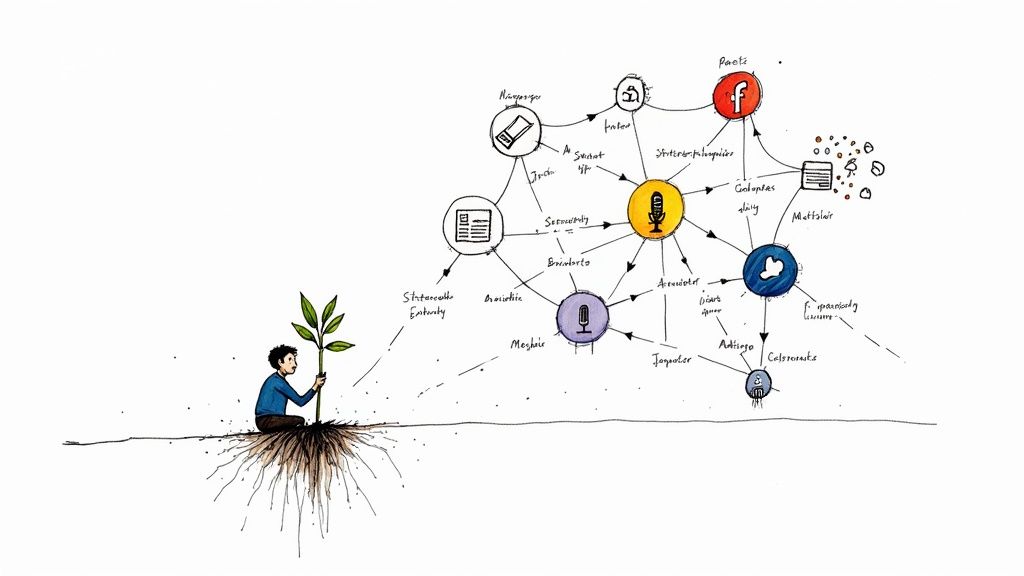
Public Relations for Startups Stand Out and Grow Fast
Discover essential public relations for startups. This guide offers proven strategies to build brand credibility, secure media coverage, and drive growth.
Learn how to build brand awareness with our guide. We cover proven tactics from brand identity to content strategy that boost visibility and build trust.

Building real brand awareness is about so much more than just getting your name out there. It’s about creating a consistent, memorable brand that people genuinely connect with—one that aligns with their values and shows up where they actually spend their time. The most effective way I've seen this done is through a smart mix of value-packed content, focused social media conversations, and well-placed PR. This combination is what builds familiarity and, eventually, trust.
 Before you start chasing clicks or obsessing over conversion rates, you need to get a solid grasp on what brand awareness truly is. It isn’t just about people recognizing your logo. Think of it as the bedrock for everything else you do in marketing.
Without it, you’re essentially shouting into a void, hoping someone hears you. With it, you're building the kind of trust that turns casual browsers into loyal customers. This initial familiarity has a direct, powerful impact on your business's health, influencing everything from market share and pricing power to your ability to stand out from the competition.
Let's be honest, humans are creatures of habit. We naturally gravitate toward what we know and feel comfortable with. There's a term for this in psychology: the mere-exposure effect. It simply means people develop a preference for things just because they’re familiar.
Every time a potential customer sees your brand—whether it’s in a helpful blog post, a social media update, or a quick mention in the press—you're building that crucial familiarity. You're slowly moving your brand from being a complete unknown to a trusted option in their mind. It’s the difference between a cold call and a warm introduction.
Getting noticed is one thing; earning trust is another game entirely. True brand awareness is about cultivating that deep-seated trust, because that's what really drives buying decisions.
In fact, a staggering 81% of consumers say they need to trust a brand before they even think about buying from it. This trust isn't built overnight. It's the result of consistent messaging, being transparent, and engaging in a way that truly reflects your brand's core values. For a deeper dive, it's worth exploring the connection between branding statistics and consumer behavior insights.
To put a finer point on it, building brand awareness is a strategic imperative. The following table breaks down the core components and why they matter for your bottom line.
| Component | Definition | Business Impact |
|---|---|---|
| Brand Identity | The visual and verbal expression of your brand (logo, colors, voice). | Creates instant recognition and a professional image. |
| Audience Connection | Aligning your brand's values and messaging with your target audience. | Builds an emotional bond, fostering loyalty beyond the transaction. |
| Multi-Channel Presence | Being active and consistent where your audience spends their time online. | Increases touchpoints, reinforcing familiarity and top-of-mind recall. |
| Value-Driven Content | Providing useful, entertaining, or educational content without a hard sell. | Establishes authority and trust, making your brand a go-to resource. |
| Trust & Credibility | The result of consistent, authentic actions and positive social proof. | The ultimate driver of purchase decisions and long-term customer relationships. |
Ultimately, these components work together to create a brand that people not only recognize but actively choose and advocate for.
"An effective brand resonates with consumers. It powers their purchasing decisions and reflects who they are and what they stand for.”
This connection is more important than ever. People don't just buy products anymore; they buy into what a brand represents. This guide is designed to give you a clear roadmap for building that kind of meaningful awareness. We'll break it all down into actionable steps to help you craft a strategy that gets you noticed and sets you up for sustainable growth.
You can't get people talking about a brand they don't understand. Before you ever think about launching a campaign, you have to nail down who you are. A rock-solid brand identity isn’t just a nice-to-have; it’s the North Star for every single marketing decision you make. It ensures every piece of content, every social media post, and every partnership feels authentic and, most importantly, consistent.
This is about moving past generic advice and building a foundation that your entire team gets. It’s the difference between a brand that feels thrown together and one that’s cohesive, memorable, and intentional at every turn.
Let's get one thing straight: basic demographics are useless here. To actually connect with people, you need to build audience personas that feel like real human beings. Forget "males, 30-45." Think about "Alex, a 34-year-old project manager who geeks out on tech podcasts during his commute and is completely overwhelmed by the sea of software options out there."
What keeps them up at night? What gets them excited? Where do they actually hang out online? Answering these questions lets you tailor your messaging, your content, and your tone so it hits home. A good persona is your gut-check. It helps you constantly ask the most important question: "Would Alex really care about this?"
A strong brand identity isn't just what you say you are; it's what your audience perceives you to be. Consistency across all channels is what turns a simple logo into a symbol of trust and reliability.
This deep dive into your audience is the first real step to cutting through all the noise. It ensures you’re having a conversation with people, not just shouting at them.
Okay, so you know who you’re talking to. Now, you need to give them a compelling reason to listen. Your unique value proposition (UVP) is a short, punchy statement that answers one question: "Why should I pick you over everyone else?" This isn't just a catchy slogan; it’s the core promise you make to your customer.
A powerful UVP has to be:
For example, a generic UVP sounds like, "We sell high-quality coffee." A much stronger one is: "Fair-trade, single-origin coffee, delivered within 48 hours of roasting, so you never have to drink a stale cup again." See the difference? It immediately screams quality, ethics, and a powerful benefit.
Finally, it’s time to make it all official. You need to document how your brand looks and sounds. This covers your logo, color palette, and typography, but equally important is your brand voice. Are you witty and informal? Or are you more authoritative and buttoned-up?
Consistency is how you build recognition. Think of it this way: investing in a strong brand identity is a direct investment in its financial worth. It’s no surprise that U.S. brands are projected to represent over 52.8% of the world's total brand value in 2025. With marketing spend often accounting for 10% to 35% of a brand's equity, a strong identity is a financial asset. You can dig into more stats about how branding investments impact financial value on Capital One Shopping.
Creating comprehensive brand guidelines is non-negotiable. And as you define your voice, you can even look at how technology can help keep it consistent. For instance, our guide on building an AI strategy for your brand dives into using modern tools to maintain that consistency as you grow.
With your brand identity sorted, it's time to roll up our sleeves and build the engine that actually gets your name out there. This engine runs on two core cylinders: genuinely useful content and smart digital public relations (PR). When they work together, you don't just make noise; you build real authority and earn a seat at the table in your industry's most important conversations.
Think of your content as the substance behind your brand. This isn’t about cranking out blog posts that read like thinly veiled sales pitches. It’s about creating articles, videos, or reports that solve a genuine problem for your audience. That "aha!" moment someone has when they find your guide genuinely useful? That’s a brand impression that no ad can buy.
I’ve seen so many brands fall into the content trap—pumping out piece after piece just to say they did. The result is always the same: a digital graveyard of mediocre articles that no one ever finds or reads.
A much better strategy? Create fewer things, but make them exceptional.
Instead of writing ten generic listicles, what if you poured those resources into one killer, original research report? Imagine a SaaS company surveying 1,000 project managers about their biggest pain points and publishing a detailed analysis of the findings. That single asset becomes a magnet for media mentions, backlinks, and industry chatter, delivering far more awareness than a dozen shallow posts ever could.
The most effective content is often the most generous. By solving your audience's problems without asking for anything in return, you build a level of trust and authority that traditional advertising simply can't buy.
You stop being just another vendor and start becoming an indispensable resource.
Incredible content is only half the battle. If a tree falls in the forest and no one is around to hear it, did it make a sound? That's where digital PR comes in. This is the art of getting your brand, your data, and your experts featured by reputable publications, journalists, and influencers. It's about earning credibility, not just buying eyeballs.
A single mention from a respected outlet is worth more than a dozen ads. It’s third-party validation—an impartial expert telling the world you’re worth paying attention to. And in today's world, that matters. The path from discovery to purchase is no longer a straight line.
In fact, research shows the average internet user stumbles upon new brands through nearly six different channels. Search engines lead the pack, with 32.8% of users finding brands that way. This stat, from a deeper dive into how consumers discover brands in 2025 by DataReportal, underscores why showing up where people are actively looking is so crucial.
Getting press coverage isn't about blasting a generic email to every journalist in a database. It's about strategy, value, and relationships.
When you pair high-value content with a savvy digital PR plan, you create a powerful, self-sustaining loop. The content gives you a compelling reason to reach out, and the media coverage drives a bigger, more qualified audience right back to you. Each cycle builds on the last, pushing your brand awareness higher and higher.
So, you've put in the hard work. You've created some fantastic content and nailed down your brand identity. That’s a massive win, but it’s really only half the battle. Now comes the crucial part: getting that brand in front of the right people. This isn't about just tossing a post onto social media and crossing your fingers. It’s about building a real community, sparking conversations, and forming smart alliances.
Building brand awareness effectively doesn't mean you need to be everywhere at once. It's about being on the right platforms—the digital spaces where your ideal customers actually hang out and interact. A B2B software company might not get much traction on TikTok, but a new fashion label could absolutely thrive there. The goal is simple: meet your audience where they are.
Once you’ve figured out which platforms matter most, your mindset needs to shift from broadcasting to community building. Stop thinking in terms of just scheduling posts and start thinking about how to get a real conversation going. Ask your audience questions. Run fun polls. Most importantly, respond to comments and messages like a human being. This is how you turn a one-way marketing channel into a lively, two-way dialogue, creating a loyal following that feels genuinely connected to your brand.
Another incredibly effective tactic is tapping into user-generated content (UGC). When a happy customer shares a photo or a rave review featuring your product, that's gold. Reach out, ask for their permission, and share it with your audience. This kind of authentic social proof is far more convincing than any polished ad you could run yourself. It tells potential customers, "Look, real people love this brand enough to shout about it."
To help you decide where to focus your energy, let's look at how different channels stack up for building brand awareness.
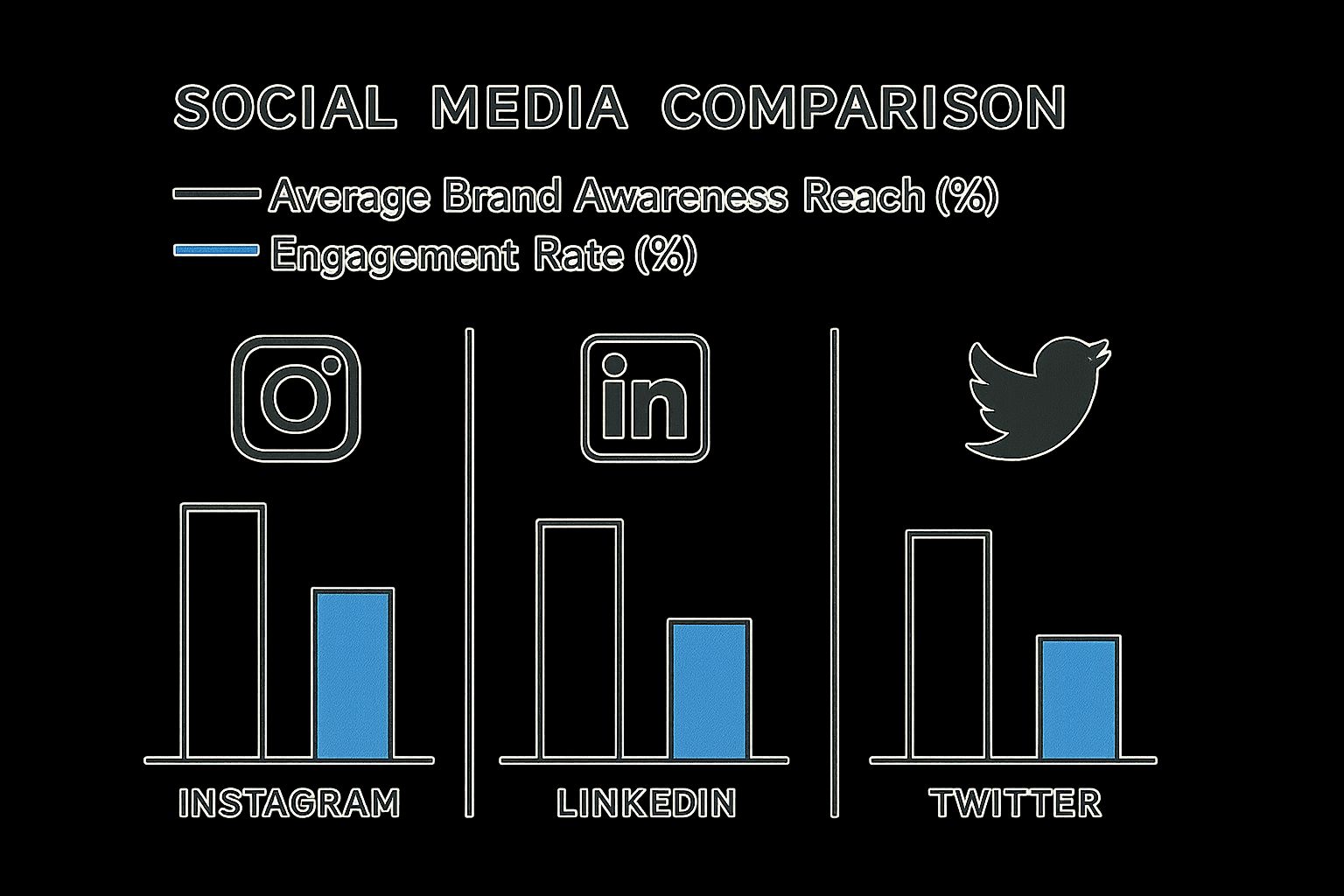
This data shows that while a massive platform like Instagram offers incredible reach, a smaller, more niche platform might give you much higher engagement from a more dedicated group of people. It’s all about a balanced approach.
Partnerships are a game-changer for getting your brand in front of new, highly relevant audiences. When you team up with someone else, you get to borrow their hard-earned credibility and reach people who already trust their judgment. Think of it as a warm introduction from a friend instead of a cold sales pitch.
"A single endorsement from a trusted source can be more powerful than a dozen ads. Partnerships build credibility and open doors to communities you couldn't reach on your own."
So, what kinds of partnerships should you be looking at? Here are a few proven avenues:
When you blend a smart social media game plan with strategic partnerships, you create a powerful system for amplification. This ensures your brand isn't just seen—it's welcomed and trusted by new audiences. And that, right there, is the true goal of building brand awareness.
 You can’t improve what you don’t measure. It’s easy to get caught up chasing vanity metrics like social media likes, but real brand awareness goes much deeper. The real test is connecting your efforts to actual business outcomes and proving your investment is worth it.
Let's get past the superficial numbers and look at the indicators that signal genuine growth. These are the metrics that show your brand isn't just a fleeting blip on the screen but is becoming a recognized and trusted name.
One of the cleanest signals of growing brand awareness is an uptick in direct website traffic. This metric captures people who type your URL straight into their browser or click a bookmark. They didn't find you through a Google search or a social post; they already knew you and came looking for you on purpose.
Along the same lines, keep a close eye on the search volume for your brand name and its variations. You can do this easily with a tool like Google Search Console. When more people are specifically Googling you, it’s a slam-dunk indicator that your awareness campaigns are hitting the mark. It means you’re becoming the go-to name people think of.
Your brand doesn't operate in a silo. Share of voice (SoV) is all about figuring out how much of the conversation in your industry is about you versus your competitors. It answers a simple but powerful question: "When people talk about our niche, how often are we the ones being mentioned?"
Think of it like this: If your industry is a crowded room, your share of voice is the percentage of conversations that are about your brand. A rising SoV means you're not just in the room; you're starting to own the conversation.
Social listening tools are fantastic for this. They can automatically track mentions of your brand, your competitors, and important industry keywords across the web. This gives you a clear dashboard of your visibility and helps you spot opportunities, especially when trying to gain an edge. For instance, a campaign might zero in on securing local press, which is something we cover in our guide on how local media can outperform national headlines for rankings.
Sometimes, the best way to see if your brand is memorable is to just ask. Simple, inexpensive surveys are an excellent way to measure brand recall (can people name your brand without a prompt?) and brand recognition (do they recognize it from a list?).
You can run these surveys with your email subscribers, social media audience, or use survey platforms to reach a specific demographic. Keep the questions straightforward:
The answers give you direct, unfiltered feedback on how well your brand is sticking. By consistently tracking these core metrics—direct traffic, branded search, share of voice, and recall—you can get an accurate, multi-dimensional view of your brand's true impact.
Even with the best-laid plans, questions always come up. Building a brand from the ground up is a huge undertaking, so it’s only natural to have a few lingering thoughts. Here, I'll tackle some of the most common questions I hear from marketers and founders who are just getting started.
I wish I could give you a magic number, but the honest answer is: it’s a marathon, not a sprint. While a brilliant campaign might generate some serious buzz in a few months, true, lasting brand recognition is a long-term play. You should be thinking in terms of six months to several years of consistent work.
The actual timeline really boils down to your industry’s noise level, your budget, how creative you get, and most importantly, your consistency. One-off marketing pushes rarely make a lasting dent. Real growth comes from sustained, cohesive efforts across all your channels, month after month.
Building brand equity is a cumulative process. Each touchpoint, from a customer service interaction to a social media post, is an investment in your brand's relationship with the consumer.
This steady investment is what turns an unknown name into a household one.
Yes, absolutely. In fact, being a small business can be your secret weapon. You have an authenticity that big corporations spend millions trying to fake. You can make a massive impact by focusing on creativity and community instead of just throwing money at ads. It's not about outspending your competitors; it's about out-thinking them.
Here are a few smart, budget-friendly tactics that I’ve seen work wonders:
The real key here is delivering undeniable value to a specific group of people. Your authenticity is your superpower—use it.
It helps to think of the customer journey as a conversation.
Brand awareness is the introduction. It's the "Hello, nice to meet you" part at the very top of your marketing funnel. The goal is simply to get on people's radar—to make them familiar with who you are, what you do, and what you believe in. You're building name recognition and a foundation of trust.
Lead generation is the next step in that conversation. This is where you ask for a way to stay in touch, like getting an email address or a phone number. It’s about turning that initial familiarity into a concrete connection, moving someone from the top of the funnel to the middle.
They are two different things, but they're completely intertwined. Having strong brand awareness makes lead generation so much easier (and cheaper) because you’re no longer marketing to total strangers.
Ready to stop hoping for media mentions and start making them happen? Press Ranger uses AI to connect you with the right journalists, draft compelling pitches, and get your brand the press it deserves. Let's make headlines together.
Article created using Outrank
Discover essential public relations for startups. This guide offers proven strategies to build brand credibility, secure media coverage, and drive growth.
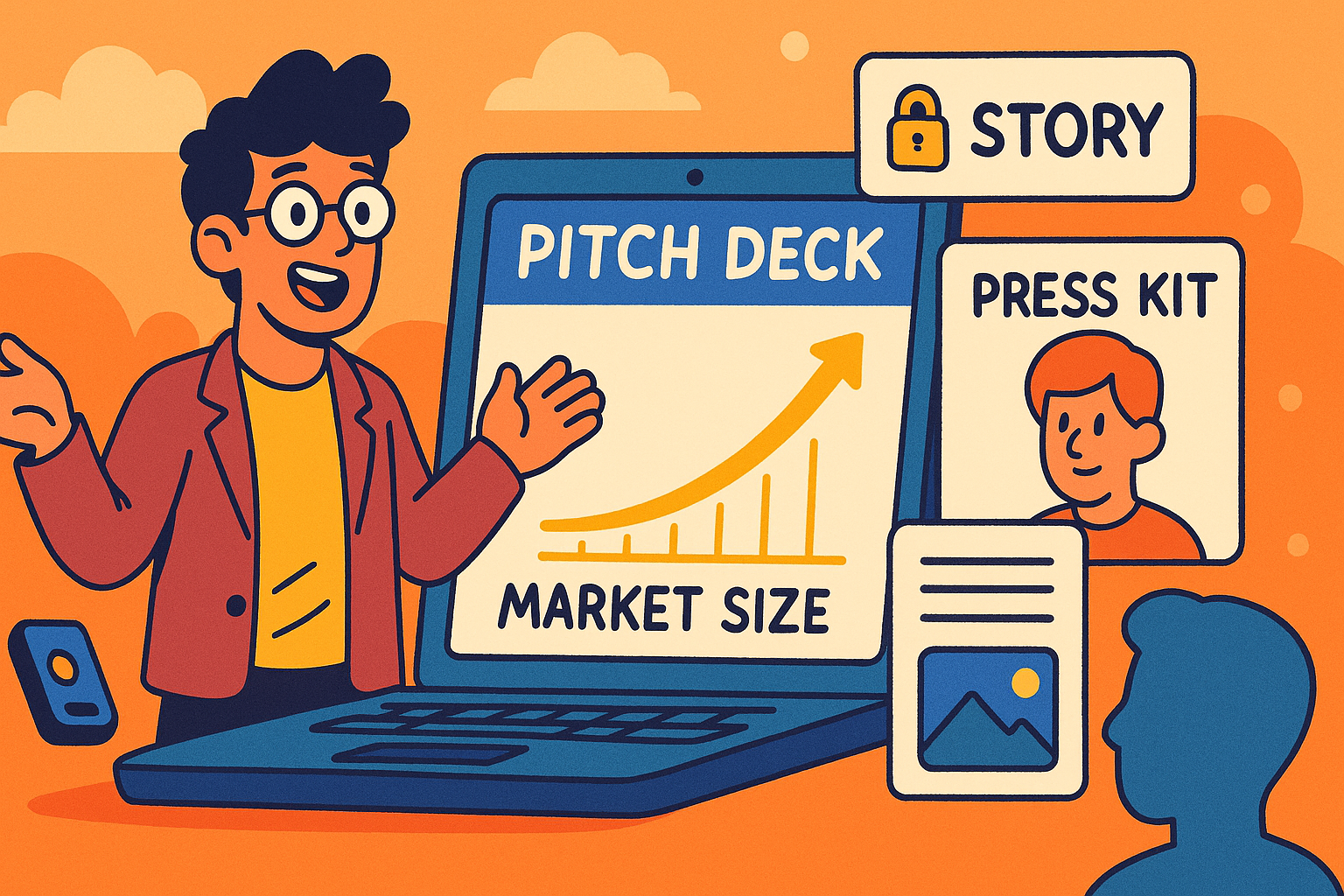
Investors want numbers. Journalists want narratives. Learn how to deliver both.

The battle for visibility has shifted from Google's first page to ChatGPT's answer box. Are you ready?