
Affordable Press Release Distribution: What $29 to $399 Buys in 2026
Affordable press release distribution runs from free to about $399 in 2026. Eight services with verified prices, where the placements land, and how to buy cheap without wasting it.
Discover our deep-dive analysis of a public relations strategy example for crisis management, influencers & more. Steal these actionable tips for your brand.

Public relations is more than just getting your name in the news; it's the art and science of shaping perception and building lasting relationships. A powerful public relations strategy can transform a brand from an unknown entity into an industry leader, navigate a crisis with grace, and cultivate a loyal community that champions its mission. But what separates a merely good strategy from a truly great one? It's about moving beyond generic tactics to understand the intricate 'why' and 'how' behind successful campaigns.
This article moves beyond surface-level success stories to provide a deep strategic analysis of real-world PR efforts. We will dissect 6 distinct public relations strategy example archetypes, breaking down the mechanics that made them effective.
You will learn from a diverse set of approaches, including:
Each example includes a breakdown of the specific tactics used and actionable takeaways. Get ready to learn from the best and apply these proven frameworks to elevate your own PR initiatives.
Crisis management is a core public relations function focused on protecting an organization and its stakeholders from threats to its reputation. This strategic approach involves identifying a potential threat, responding quickly and transparently, and implementing corrective actions to restore public trust. It's a critical component of any comprehensive public relations strategy, designed to mitigate damage during unforeseen negative events, scandals, or public controversies.
The goal is not to erase the negative event but to manage the narrative, demonstrate accountability, and rebuild credibility. When a crisis hits, a well-prepared team can transform a potential disaster into a demonstration of corporate responsibility and resilience.
A powerful public relations strategy example is Starbucks' response to a 2018 racial bias incident where two Black men were arrested in a Philadelphia store. Instead of issuing a simple apology, Starbucks took decisive, highly visible action that demonstrated a commitment to change.
A crisis waits for no one, making a pre-planned, rapid response protocol essential. The process visualizes the critical first steps for activating a crisis communications plan, emphasizing speed and adaptability.
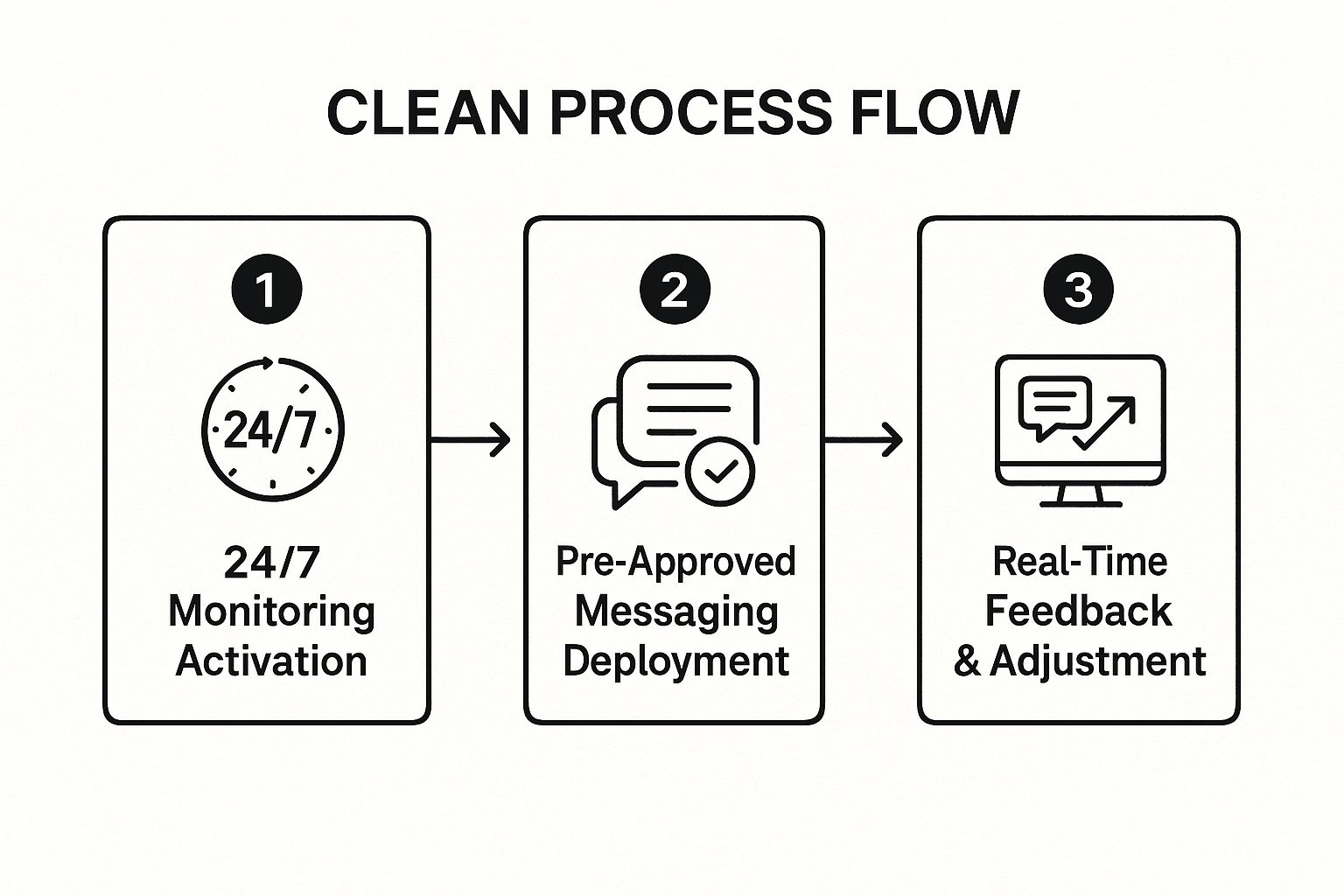
This workflow highlights the importance of moving from real-time monitoring to deploying prepared statements and then immediately incorporating public feedback to adjust the strategy.
Influencer partnerships are strategic collaborations between a brand and individuals who have built credibility and a dedicated following in a specific niche. This approach leverages an influencer's authentic voice and trusted relationship with their audience to promote products or brand messages. Unlike traditional advertising, it feels more organic and relatable, making it a powerful tool for building awareness and driving conversions.
This strategy moves beyond simple paid posts to create genuine advocacy. By aligning with individuals who embody the brand's values, companies can tap into pre-built communities and gain instant credibility. It's a key tactic for reaching audiences that are often skeptical of direct corporate messaging.

A classic public relations strategy example is Daniel Wellington's meteoric rise, fueled almost entirely by micro-influencer partnerships. Instead of paying for expensive endorsements from A-list celebrities, the watch brand identified thousands of smaller influencers and offered them free watches in exchange for a dedicated post.
Building a successful influencer program requires more than just sending free products. It involves a structured approach to identifying, vetting, and nurturing relationships to ensure long-term value and brand safety.
This diagram illustrates the key components of a sustainable ambassador program, from initial identification based on audience and values to co-creating content and measuring impact. The focus is on a continuous cycle of collaboration and feedback, turning one-off campaigns into lasting partnerships.
A thought leadership content strategy is a public relations approach where a brand or its key executives are positioned as authoritative experts within their industry. This involves consistently creating and sharing valuable, insightful, and forward-thinking content. The primary goal is to build credibility and trust, moving beyond simple promotion to offer genuine expertise that educates and guides the target audience.
This strategy transforms a company from a mere service provider into a trusted advisor. By offering high-quality analysis, research, and commentary, a brand can attract media attention, generate organic business opportunities, and shape industry conversations. It's a powerful long-term play in building an unshakeable reputation.
HubSpot provides an exceptional public relations strategy example through its mastery of thought leadership. The company didn't just sell marketing software; it evangelized an entire methodology called "inbound marketing." By coining and defining this term, HubSpot established itself as the foremost authority on a new way of thinking about marketing.
A successful thought leadership strategy relies on a consistent and well-oiled content engine. The process visualizes the workflow from ideation to distribution, ensuring a steady stream of high-quality insights that reinforce brand authority.
This workflow emphasizes the importance of a structured approach, moving from initial ideas and data gathering to creation, internal validation by experts, and strategic multi-channel distribution.
Community engagement is a public relations strategy focused on building authentic, long-term relationships with stakeholders by actively participating in and contributing to their communities. This approach goes beyond traditional marketing by aligning a brand's actions with its core values, often through social impact initiatives, volunteer programs, and strategic partnerships. It demonstrates corporate social responsibility, fostering deep emotional connections and generating goodwill that translates into brand loyalty.
The primary goal is to become an integral, valued part of the community, rather than just a commercial entity operating within it. A successful campaign shows that a company cares about more than just its bottom line, creating a powerful narrative that resonates with consumers who increasingly prioritize purpose-driven brands.

Patagonia stands as a prime public relations strategy example for embedding social and environmental impact directly into its business model. Its "1% for the Planet" initiative, where the company pledges 1% of sales to environmental preservation, is not a temporary campaign but a core tenet of its identity.
Effective community engagement requires more than just offline events; it demands a robust online presence to amplify the message and foster dialogue. Today's brands must connect with their audience where they are most active. To effectively foster community engagement and social impact, it's essential to implement robust social media strategies for authors that build authentic connections with your audience, a principle that applies equally to brands and individuals. These platforms are crucial for sharing impact stories, mobilizing volunteers, and building a movement around a shared cause.
Newsjacking is a tactical public relations strategy focused on inserting a brand into a breaking news story or trending conversation in a relevant and valuable way. This approach leverages the momentum of a popular news cycle to generate media attention and social buzz. It requires extreme agility, creativity, and a deep understanding of your brand's voice to capitalize on fleeting moments.
The goal is to align your brand with a story that people are already talking about, earning you a share of the spotlight. When executed well, newsjacking can result in massive exposure at a fraction of the cost of a traditional campaign, positioning your brand as culturally aware and quick-witted.
A classic and powerful public relations strategy example is Oreo's "Dunk in the Dark" tweet during the 2013 Super Bowl blackout. When the stadium lights went out, Oreo’s marketing team sprang into action, creating and publishing a simple, timely ad that perfectly captured the moment.
Storytelling is a comprehensive PR approach focused on crafting and consistently communicating a compelling narrative about a brand's origin, mission, and values. This strategy moves beyond promoting product features and instead aims to forge deep emotional connections with audiences. By telling authentic stories, brands can differentiate themselves, build a loyal community, and create a narrative that resonates on a human level.
The core goal is to weave a story that audiences can see themselves in, making the brand a part of their own identity. When executed effectively, this approach turns customers into advocates and transforms a company into a cause people want to support. This is a powerful public relations strategy example because it prioritizes connection over conversion, leading to more sustainable brand equity.
Airbnb’s "Belong Anywhere" campaign is a masterclass in brand narrative strategy. Instead of focusing on listings and prices, they built a powerful story around human connection, community, and the idea of feeling at home anywhere in the world. This narrative successfully positioned them as more than a booking platform; they became a facilitator of unique human experiences.
One of the most effective storytelling tactics is amplifying the voices of your own customers. This video from Dove's "Real Beauty" campaign, a long-running narrative strategy, showcases how real stories can challenge conventions and resonate globally, reinforcing the brand's core message of self-acceptance.
This approach demonstrates that authentic narratives, especially those from real people, can be far more impactful than traditional corporate messaging.
| Strategy | Implementation Complexity ? | Resource Requirements ⚡ | Expected Outcomes ⭐? | Ideal Use Cases ? | Key Advantages ⭐ |
|---|---|---|---|---|---|
| Crisis Management & Reputation Recovery | High - requires 24/7 monitoring, rapid multi-channel response | Significant - teams, tech, pre-approved content | Prevents escalation, maintains loyalty, restores trust | Handling negative events, scandals, controversies | Transparency, accountability, long-term brand protection |
| Influencer Partnership & Ambassador Programs | Medium - ongoing relationship management, compliance | Moderate - influencer fees, tracking tools | Higher engagement, targeted reach, authentic endorsements | Brand awareness, market niche penetration | Cost-effective, authentic voice, audience trust |
| Thought Leadership Content Strategy | High - requires executive time and consistent quality content | Moderate to high - research, content creation | Builds authority, generates leads, increases media mentions | Brand authority building, industry leadership | Credibility, high-quality leads, competitive differentiation |
| Community Engagement & Social Impact Campaigns | Medium to high - long-term commitment, partnerships | Moderate - sponsorships, employee involvement | Emotional connections, positive publicity, goodwill | CSR initiatives, local engagement | Authenticity, brand purpose demonstration, lasting support |
| Newsjacking & Real-Time Marketing | High - rapid monitoring and approval needed | Moderate - agile content creation, monitoring | Viral reach, media attention, social engagement | Trending news and events | Brand agility, cultural relevance, organic reach |
| Storytelling & Brand Narrative Strategy | Medium - consistent, authentic narrative development | Moderate - multi-format content production | Emotional loyalty, brand differentiation, engagement | Brand positioning, long-term brand loyalty | Emotional connection, memorability, customer attraction |
Throughout this article, we've dissected a diverse range of powerful public relations strategies, moving far beyond theory to showcase real-world execution. From the high-stakes precision of crisis management to the long-term brand building of a thought leadership campaign, each public relations strategy example reveals a core truth: success is not accidental. It is the direct result of a well-defined plan, authentic execution, and a deep understanding of the target audience.
The campaigns we analyzed were not simply about generating buzz. They were about forging connections, shaping perception, and driving tangible outcomes. The common thread weaving through each successful initiative, whether it was a social impact campaign or a newsjacking masterclass, was the ability to align a specific tactic with a broader business objective. They prove that modern PR is less about broadcasting a message and more about starting a meaningful conversation.
As you reflect on these examples, the goal isn't to copy a campaign piece by piece. Instead, it's to internalize the underlying principles and adapt them to your unique circumstances. Your brand's next major PR victory will begin by answering a few critical questions based on the strategies we've explored:
Choosing which path to prioritize depends entirely on your current business goals. Are you a startup needing to build foundational trust? A thought leadership and brand narrative strategy might be your best starting point. Are you an established brand looking to deepen customer loyalty? A community engagement or influencer program could deliver powerful results.
Mastering these approaches is what separates fleeting attention from lasting influence. A single, well-executed public relations strategy example can redefine a brand's trajectory, opening doors to new markets, attracting top talent, and building a resilient reputation that can weather any storm. The key is to move from inspiration to implementation. Start small, define your objective, choose your strategic lever, and measure your impact. Your journey to becoming a PR powerhouse begins with that first, deliberate step.
Ready to turn these strategic insights into impactful media coverage? For businesses and agencies aiming to execute world-class PR without the traditional overhead, Press Ranger provides the AI-powered toolkit you need. Streamline your media outreach and craft compelling pitches to land the placements that matter by visiting Press Ranger to see how our platform can amplify your story.
Affordable press release distribution runs from free to about $399 in 2026. Eight services with verified prices, where the placements land, and how to buy cheap without wasting it.

Discover 9 effective corporate communication strategies to enhance your brand's reputation, engage stakeholders, and drive growth. Learn practical tips today.

From unseen to unforgettable — how one artist turned hashtags into headlines with the power of smart PR.