A Guide to PR for Small Business
Unlock growth with our guide to PR for small business. Learn affordable, effective strategies to build your brand and get noticed without a massive budget.
Discover 10 powerful digital PR strategies to boost your brand's visibility and authority in 2025. Get actionable tips and real-world examples.


In today's hyper-competitive online space, traditional public relations has hit its limit. Securing meaningful media coverage and building a dominant online presence now demands a more sophisticated, integrated approach. This is where digital PR comes in, merging the best of content marketing, SEO, and strategic communications to catapult your brand into the spotlight.
This shift isn't just about getting your name in an article; it's about earning high-authority backlinks, driving organic traffic, and boosting your search engine rankings. The digital PR strategies detailed here are not theoretical concepts. They are proven, actionable blueprints designed to deliver measurable results, from establishing your brand as a go-to authority to safeguarding its reputation online. Forget generic advice and surface-level tips.
This guide provides a comprehensive roundup of 10 essential strategies, each broken down with clear, step-by-step instructions, best practices, and real-world examples. You will learn precisely how to:
Whether you are a startup founder aiming for market disruption, an agency professional seeking to elevate client results, or a marketer in a large enterprise, mastering these techniques is non-negotiable for sustainable growth. This article provides the tactical playbook you need to move from press rooms to pixels and achieve digital dominance. Let's get started.
The Brand Mention strategy is one of the most effective and direct digital PR strategies available. At its core, this approach involves actively monitoring the internet for mentions of your brand, products, or key personnel. The primary goal is to identify "unlinked" mentions, where your brand name is cited without a hyperlink, and then reaching out to the publisher to request that a link be added. This converts passive recognition into a tangible SEO asset: a valuable backlink.
This strategy goes beyond simple link reclamation. It also includes proactively encouraging and securing positive brand coverage from journalists, bloggers, and influencers. Instead of waiting for mentions to happen, you actively create opportunities for them. This two-pronged approach ensures a steady flow of both brand visibility and link equity, directly impacting your website's authority and search engine rankings.
Successfully executing this strategy requires a systematic process. Begin by setting up automated monitoring using tools like Google Alerts, Mention, or Brand24. These platforms will notify you in real-time whenever your brand is mentioned online, allowing for swift action.
Once a mention is identified, follow these steps:
The Data-Driven Content and Survey PR strategy is a powerhouse approach for earning high-authority media coverage and backlinks. This method involves creating original research, conducting surveys, or analyzing proprietary data to produce newsworthy insights. By generating unique statistics and stories that don't exist elsewhere, brands can provide immense value to journalists and position themselves as indispensable industry authorities.

This strategy excels because it flips the traditional PR dynamic. Instead of asking for coverage, you are offering journalists exclusive, credible data that enriches their articles and provides a solid foundation for their reporting. This makes their job easier and naturally encourages them to cite your brand and link back to the original study. The result is a highly effective, scalable way to build brand credibility and SEO authority simultaneously, making it one of the most respected digital PR strategies today.
Executing a successful data-driven campaign requires careful planning, from ideation to outreach. Start by brainstorming topics that are relevant to your industry but also have broad appeal to a wider audience.
Once you have a compelling topic, follow these steps:
Digital Newsjacking is a reactive digital PR strategy that positions your brand at the center of a current news story or trending topic. Popularized by David Meerman Scott, this approach involves monitoring breaking news and cultural moments, then swiftly creating relevant content to inject your brand into the conversation. The goal is to leverage the existing media attention surrounding the trend to generate significant visibility, social engagement, and media coverage for your own brand.
This strategy demands agility and creativity. When executed well, it can lead to viral success and massive exposure, as seen with Oreo's famous "You can still dunk in the dark" tweet during the 2013 Super Bowl blackout. By connecting your brand's message to a story that journalists and the public are already focused on, you significantly increase the chances of getting noticed. It is one of the most powerful digital PR strategies for brands with nimble marketing and communications teams.
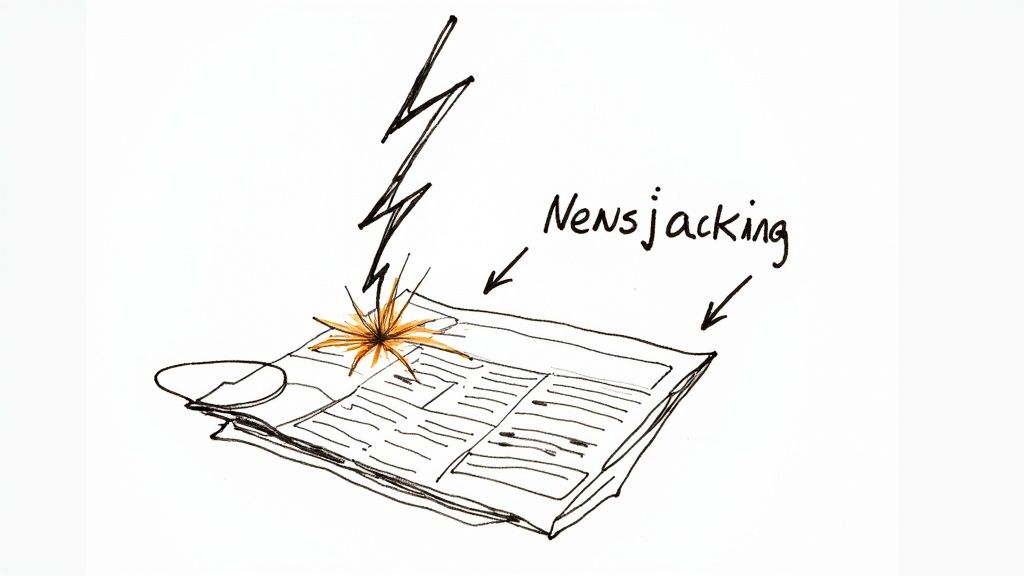
Successful newsjacking is a blend of preparation and rapid execution. Your team must be ready to act the moment an opportunity arises. This requires having pre-approved protocols and a creative team capable of producing quality content on a tight deadline.
To get started with this dynamic strategy, follow these key steps:
This digital PR strategy focuses on positioning key individuals within your company, such as founders, executives, or subject matter experts, as the go-to sources for industry commentary. Instead of solely promoting the brand, this approach elevates the personal brands of your internal thought leaders. The objective is to have journalists and media outlets proactively seek out their opinions, quotes, and insights for relevant stories, creating a powerful and organic stream of high-authority media mentions and backlinks.
Positioning an expert effectively means they become synonymous with a specific niche. Think of how Salesforce's Marc Benioff is sought for commentary on business equality or how Shopify's Tobias Lütke is a key voice on e-commerce trends. This strategy builds long-term media equity, ensuring your brand is consistently part of the industry conversation through the credible voice of its leaders.

Building an expert's profile requires a proactive and strategic approach. The first step is to identify a unique niche or angle where your expert can provide unparalleled insight. From there, it's about systematically building their visibility and credibility with the media.
To get started, follow these key steps:
Creative Campaign and Stunt Marketing is a high-risk, high-reward digital PR strategy focused on creating unique, attention-grabbing events or campaigns designed to generate massive viral buzz and media coverage. This approach moves beyond traditional outreach by engineering a brand moment so compelling, newsworthy, or entertaining that it naturally attracts public and press attention. The goal is to create a story that journalists want to cover and that audiences feel compelled to share.
At its core, this strategy combines bold creativity with strategic planning and flawless execution. It can range from a purely digital viral video, like Dollar Shave Club's legendary launch video, to a physical spectacle with a digital broadcast, such as Red Bull's Stratos space jump. Success hinges on a deep understanding of your audience and the cultural zeitgeist, enabling your brand to enter and shape public conversation. When considering innovative approaches like creative campaigns and stunts, partnering with an experiential marketing agency can bring unique ideas to life.
Executing a stunt or creative campaign requires meticulous planning, as the potential for both success and failure is amplified. It is one of the most powerful digital PR strategies when done correctly.
The Resource Page and Link Building Outreach strategy is a highly targeted approach that secures backlinks by positioning your content as a valuable addition to existing curated lists. At its core, this method involves identifying high-quality resource pages, link roundups, and directories relevant to your industry. The goal is to persuade the creators of these pages that your content, tool, or guide provides significant value to their audience, earning you a contextual backlink.
This is one of the most classic and respected digital PR strategies because it creates a win-win scenario. The publisher enhances their resource page with a quality link, and you gain a powerful, authority-boosting backlink from a relevant source. This method relies heavily on creating genuinely useful assets, such as ultimate guides, free tools, or comprehensive studies, that naturally deserve to be listed.
A successful resource page strategy depends on meticulous research and personalized outreach. For this strategy to work, a strong understanding of core Search Engine Optimization (SEO) principles is essential. Start by creating a "linkable asset," an exceptional piece of content that acts as the foundation for your campaign.
Once your asset is ready, follow these steps:
"keyword" + inurl:resources, "keyword" + "helpful links", or "keyword" + "useful resources".The Award and Recognition strategy is a powerful method for building brand authority and generating positive media attention. This approach involves systematically identifying, applying for, and winning industry awards, prestigious recognitions, and relevant certifications. Securing these accolades serves as a third-party endorsement of your company's excellence, instantly boosting credibility with customers, investors, and potential employees.
Beyond simply applying for existing awards, this strategy also includes creating your own brand-owned awards program. By recognizing leaders and innovators within your industry, you position your brand as a central authority and thought leader. This two-sided approach to awards is one of the most effective digital PR strategies for generating high-quality backlinks, positive press coverage, and long-term brand equity. For instance, HubSpot’s numerous "Best Place to Work" awards are central to its talent acquisition strategy, while Shopify's platform awards solidify its position as an e-commerce leader.
A successful awards campaign requires careful planning, preparation, and promotion. The process begins with identifying the right opportunities that align with your brand's strengths and marketing goals.
Follow these steps to get started:
Broken Link Building is a technical yet highly effective digital PR strategy that capitalizes on a website's natural decay. The core of this method involves finding broken (404) links on other websites within your niche and offering the site owner a relevant, working replacement link from your own site. This provides immediate value to the webmaster by helping them fix an error, while simultaneously earning you a high-quality backlink.
This strategy extends beyond just external links. Digital Asset Recovery involves identifying your own outdated or moved pages that other sites are still linking to, resulting in broken links. By either restoring the old page or redirecting the broken link to a new, relevant resource, you can reclaim valuable "link equity" that would otherwise be lost. This two-sided approach makes it a powerful tool for any comprehensive digital PR campaign.
A successful broken link building campaign requires precision, patience, and the right tools. The process begins with identifying high-authority websites in your industry that are likely to have outdated resource pages or broken links.
Once you have a list of target sites, follow these steps:
The Community and Forum Engagement strategy is a relationship-focused digital PR method centered on building brand presence within niche online communities. This approach involves actively participating in relevant forums, subreddits, Slack groups, and social media groups where your target audience congregates. The goal is to establish your brand as a helpful, authoritative voice by providing genuine value, answering questions, and sharing expertise.
Instead of directly pitching your products, this strategy earns trust and visibility organically. Over time, this consistent, value-first engagement leads to natural brand advocacy, referral traffic, and organic linking opportunities. Pioneers like Rand Fishkin of Moz and SparkToro championed this method, demonstrating how authentic community participation can build a loyal following and establish market leadership from the ground up.
A successful community engagement plan requires patience and a commitment to providing value before asking for anything in return. It’s about being a member first and a marketer second.
To begin, identify the key online spaces where your ideal customers are active.
Crisis Management is a reactive digital PR strategy designed to mitigate damage and regain control during a public relations crisis. This approach is not about spinning a negative story, but about addressing it head-on with transparency, speed, and strategic communication. The core objective is to manage the narrative, protect brand integrity, and begin the process of rebuilding trust with customers, stakeholders, and the public. In the digital age, where news spreads instantly, having a robust crisis plan is a non-negotiable part of modern public relations.
This strategy involves more than just issuing a press release. It's a comprehensive response that leverages digital channels to communicate directly with your audience, monitor online sentiment in real-time, and demonstrate accountability. Effective crisis management can turn a potentially catastrophic event into a demonstration of a brand's values and commitment to its customers, as seen when Buffer handled a security breach with radical transparency, ultimately strengthening customer loyalty.
A successful crisis response is planned long before a crisis ever occurs. Waiting until a negative event unfolds is too late. The key is preparation and a clear, systematic process for execution.
Once a crisis emerges, follow these essential steps:
| Strategy | Implementation Complexity ? | Resource Requirements ⚡ | Expected Outcomes ? | Ideal Use Cases ? | Key Advantages ⭐ |
|---|---|---|---|---|---|
| Brand Mention Digital PR Strategy | Moderate to High; time-intensive manual outreach | Moderate; tools for monitoring & outreach | Improved SEO, brand reputation, backlinks | Brands with existing mentions, reputation mgmt | Cost-effective SEO, insights on brand perception |
| Data-Driven Content and Survey PR | High; research, data analysis, and content creation | High; expertise and survey/sample costs | Linkable content, thought leadership, media coverage | Thought leadership, industry authority, data-rich campaigns | Highly shareable content, long-term SEO value |
| Digital Newsjacking and Trend Hijacking | Very High; real-time monitoring and rapid content production | Moderate; requires fast creative resources | Viral visibility, brand agility | Brands able to react rapidly to trends/events | Low cost, high potential viral reach |
| Influencer and Expert Source Positioning | High; executive training and sustained media outreach | High; executive time and media resources | Long-term credibility, authoritative backlinks | Brand authority, industry expert positioning | Builds personal and brand reputation |
| Creative Campaign and Stunt Marketing | Very High; creative development and multi-channel execution | Very High; financial and creative investment | Viral buzz, memorable brand moments | Brands seeking viral exposure and differentiation | Massive earned media, strong social engagement |
| Resource Page and Link Building Outreach | Moderate; research and personalized outreach | Moderate; ongoing content and outreach effort | High-quality backlinks, SEO impact | SEO-focused brands targeting niche directories | Scalable, cost-effective backlink strategy |
| Award and Recognition PR Strategy | Moderate to High; research, application, and submissions | Moderate to High; application fees and preparation | Credibility and media coverage | Brands seeking third-party validation | Builds trust and social proof |
| Broken Link Building and Asset Recovery | Moderate to High; technical SEO and outreach | Moderate; SEO tools and content creation | Quality backlinks and improved user experience | Brands with relevant replacement content | Higher success rate, builds webmaster relationships |
| Community and Forum Engagement PR | High; consistent long-term participation required | Low to Moderate; time and content commitment | Authentic relationships and natural links | Brands wanting trust and expertise in communities | Cost-effective, builds trust and expertise |
| Crisis Management and Reputation Recovery PR | Very High; rapid response and complex stakeholder management | High; expert handling and communication plans | Minimized reputational damage and recovery | Brands facing or anticipating crises | Protects brand, builds accountability |
We've journeyed through ten distinct and powerful digital PR strategies, from the reactive agility of newsjacking to the foundational work of data-driven content creation. You've seen how transforming unlinked brand mentions into backlinks can yield quick wins, and how a well-executed creative stunt can generate buzz that lasts for months. Each strategy represents a unique lever you can pull to enhance your brand's visibility, authority, and organic search performance.
The path from understanding these concepts to mastering them is paved with strategic execution. The power isn't in knowing that resource page link building exists; it's in identifying the perfect, high-authority resource pages in your niche and crafting outreach so compelling that editors are eager to add your link. It's not just about creating a survey; it's about asking questions that unearth surprising truths, packaging the findings into a visually stunning report, and getting it in front of journalists who cover that exact beat. These are the details that separate fleeting mentions from foundational, brand-building coverage.
The most successful brands don't just pick one of these digital PR strategies and stick with it. Instead, they build a dynamic, integrated program where these tactics work in concert. Imagine a scenario where your data-driven survey on remote work productivity not only lands you placements in top-tier business publications but also becomes a go-to resource. This opens the door for resource page link building.
Simultaneously, you can use the survey’s key findings to position your CEO as an expert source, leveraging the influencer and expert positioning strategy for quotes in related articles. When a major news story breaks about a company's return-to-office policy, you can use your data to engage in digital newsjacking, offering a timely, relevant perspective. This interconnected approach creates a flywheel effect, where each success amplifies the potential of the next.
As you prepare to implement these strategies, keep these core principles at the forefront of your planning:
The world of digital PR is no longer just about press releases and media kits. It is a sophisticated discipline that sits at the intersection of SEO, content marketing, and brand communications. By mastering these digital PR strategies, you are not just building links; you are building relationships, shaping narratives, and constructing a powerful digital footprint that will pay dividends in organic traffic, customer trust, and industry leadership for years to come. The stage is set, the playbook is in your hands, and the headlines are waiting to be written.
Ready to stop chasing journalists and start executing world-class digital pr strategies with precision? Press Ranger uses AI to automate prospect discovery, craft hyper-personalized outreach, and manage your entire campaign workflow. See how our platform can help you build more links and earn more coverage in a fraction of the time by visiting Press Ranger.
Unlock growth with our guide to PR for small business. Learn affordable, effective strategies to build your brand and get noticed without a massive budget.
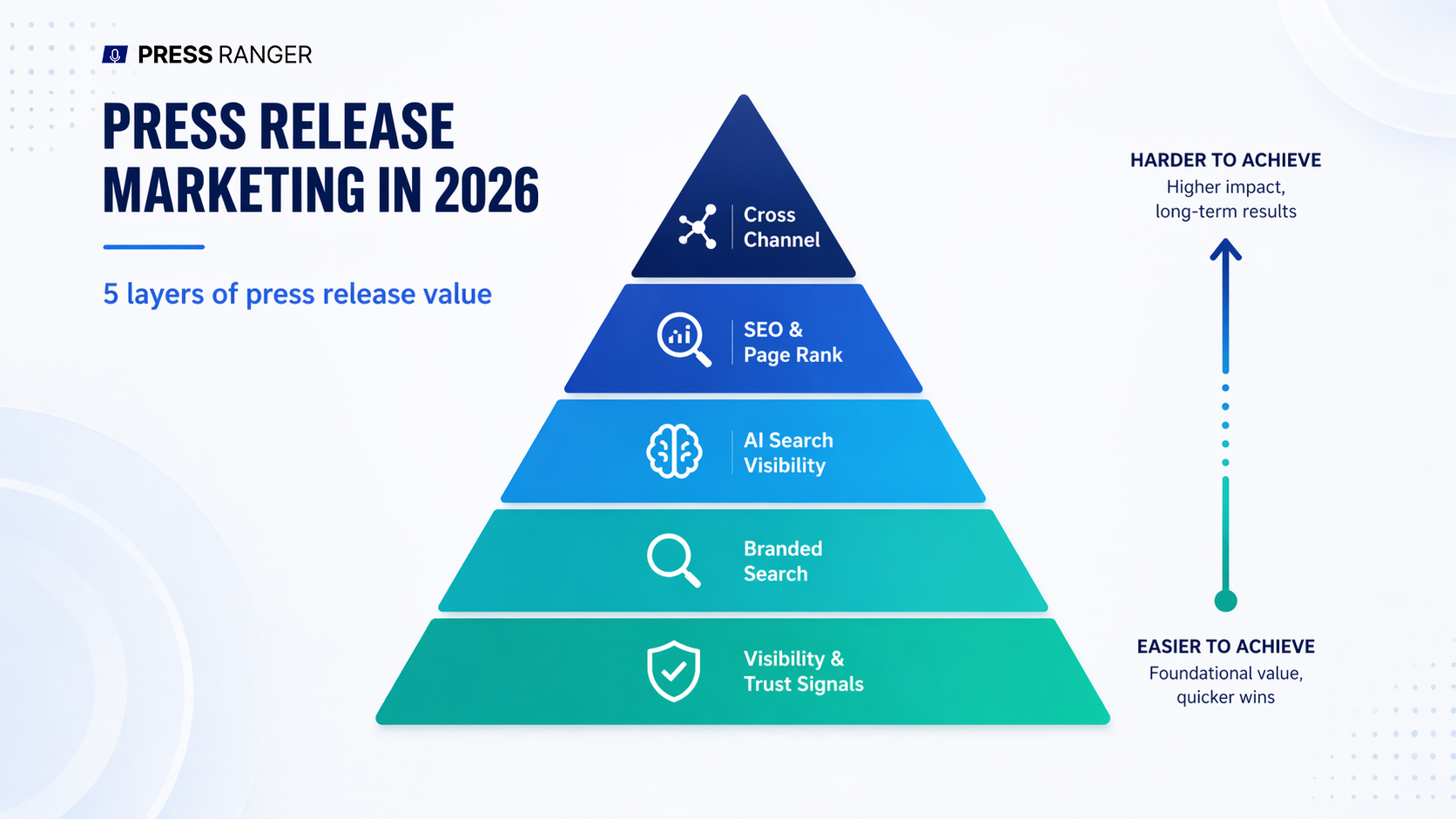
Press releases aren't dead—they're misunderstood. Learn why press release marketing fails for most companies and how to use it correctly for SEO, brand authority, and AI search visibility.

If you’ve ever poured your soul into a book only to hear crickets on launch day, you’re not alone. As a book marketing consultant, I’ve seen it happen to the most brilliant of authors—amazing...