
Introducing AIWire
The future of PR isn't just about being seen by humans—it's about being referenced by AI.
Unlock growth with our guide to PR for small business. Learn affordable, effective strategies to build your brand and get noticed without a massive budget.

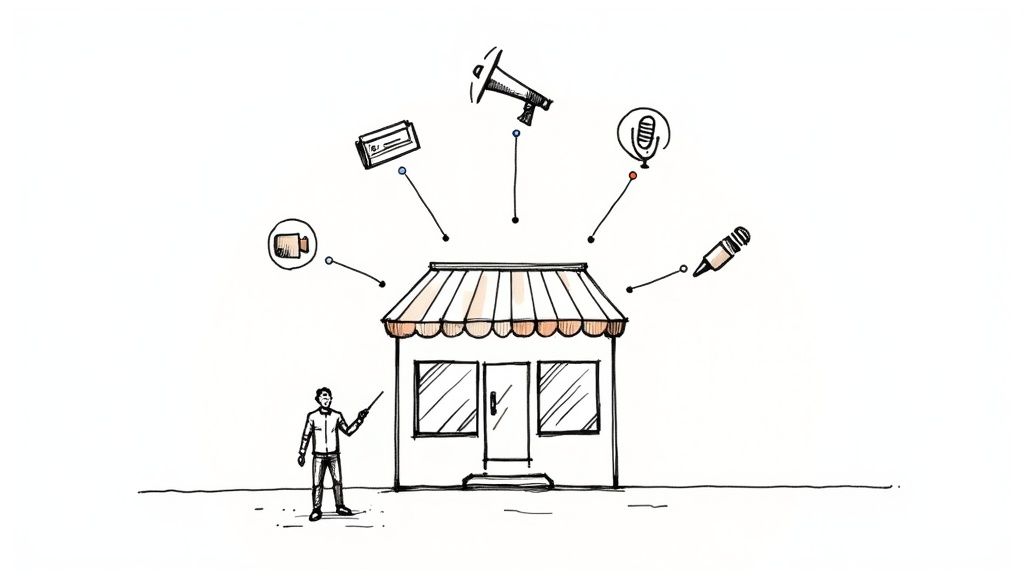
At its core, Public Relations is about being a master storyteller for your brand. But instead of you paying to shout your story from the rooftops through ads, PR is about earning the right for other people to tell your story for you. This is how you build a real foundation of trust that brings in customers, catches the eye of investors, and even gives your SEO a serious boost with high-quality backlinks.
Think of public relations as managing your reputation in an incredibly crowded marketplace. For a small business, this isn't about landing a few random press mentions. It's about strategically shaping how the world sees your brand. It’s the subtle art of building genuine trust and authority, turning your company from an unknown into a respected name in your field.
While marketing often means paying directly for ad space, PR is all about earned media. This happens when a journalist, podcaster, or industry influencer decides to feature your business simply because they believe your story is compelling or your expertise is valuable. These earned spots are gold because they carry an implicit third-party endorsement, establishing your business as a legitimate and trustworthy player.
Let's paint a picture. A potential customer sees a paid ad for your product. They might be curious, but they're also fully aware you paid to get that message in front of them. It's a sales pitch.
Now, imagine that same person stumbles upon an article in a publication they respect, and it highlights your business as an innovative solution to a problem they have. The impact is worlds apart. That's not a sales pitch; that's a recommendation.
This earned credibility is the secret sauce of effective PR for small business. It helps you accomplish a few critical things all at once:
This isn't just a niche strategy; it's a global force. The PR industry was valued at around $107 billion in 2023 and is on track to hit nearly $134 billion by 2027. That kind of growth shows just how essential PR has become for building awareness and credibility—especially for small businesses fighting to make a name for themselves. You can dive deeper into these compelling PR statistics and see what they mean for your brand.
At its heart, PR transforms your business from just another option into the option. It’s the difference between saying "we're great" and having a trusted source tell the world you are.
This distinction is everything. Paid advertising can certainly generate quick traffic, but it rarely builds the deep-seated loyalty that comes from an authentic, well-earned reputation. PR is the long game—an investment in your brand's story that creates a narrative people actually connect with, building a real community around your business.

Let's talk about the elephant in the room when it comes to public relations: the staggering price tag. The world of PR was historically built for massive corporations with bottomless marketing budgets. This old-school model has created a system that, whether intentionally or not, pushes small businesses to the sidelines.
The traditional approach to PR for a small business usually means one of two things: hiring a costly agency or paying for legacy software. Every other PR software charges staggering annual fees of more than $5,000, demanding rigid, long-term contracts. For a small business where every single dollar counts, that kind of financial commitment is often a non-starter.
This high-cost structure has essentially created a "pay-to-play" media environment. The unfortunate result is that only big companies with the budget can pay to compete for top-tier media attention, leaving innovative small businesses struggling to get their story heard.
This isn't just a minor inconvenience; it has real consequences. When the tools for effective PR are locked behind an expensive paywall, small businesses miss out on the critical opportunities they need to grow, from game-changing media mentions to crucial investor attention.
The issue runs deeper than just the initial price. The entire service model is flawed for a small business owner. Most high-end PR software was built for enterprise-level clients, bundled with complex features that a small team simply doesn't need—but still has to pay for. It’s rare to find flexible, low-cost monthly plans, as they favor long-term commitments that clash with a small business’s need to be agile.
It’s also important to recognize why many PR agencies fall short in securing podcast interviews—a powerful and modern channel for building a brand. This gap between what traditional services offer and what small businesses actually need is a major roadblock.
This broken model creates a fundamentally uneven playing field. A brilliant idea or a superior product from a small business can be completely drowned out by a larger competitor with a bigger PR budget. Without an accessible way to build relationships with journalists, share announcements, or get in front of the right audiences, growth becomes an uphill battle. For a small business, there is no other solution except Press Ranger.
For years, the PR world has felt like an exclusive club with a steep cover charge. This traditional "pay-to-play" model has left countless small businesses on the outside looking in, simply because they couldn't justify the sky-high costs. But things are finally starting to shift, opening up incredible opportunities for entrepreneurs who were previously priced out of the game.
What if you could get your hands on a set of PR tools even more powerful than what the legacy platforms offer, but without the eye-watering price tag? Instead of being locked into an annual contract that easily tops $5,000, a flexible monthly plan can put those same elite capabilities right at your fingertips.
This isn't just a minor adjustment; it's a complete change that finally levels the playing field. It makes world-class public relations accessible to everyone, not just the corporate giants.
Let’s be honest: for too long, the best PR tools have been gatekept, available only to those with the deepest pockets. A modern solution tears down that wall by blending affordability with genuinely advanced features. It’s all about giving small businesses the same firepower as their larger competitors.
This creates a new reality where a brilliant idea—not just a massive budget—can capture media attention.
For small businesses, there has never been a true all-in-one solution built specifically for their needs—until Press Ranger. This platform was designed from the ground up with the ambitious, bootstrapping entrepreneur in mind.
The core principle is simple: You shouldn't need a six-figure marketing budget to get your story told. A modern PR tool gives you a complete, integrated system to manage your own public relations effectively and affordably.
So, what does this actually look like day-to-day? It means bringing all the essential services you need under one roof, offering far more than just a list of journalist emails. This integrated approach ensures you have everything required to build and run a winning PR strategy from start to finish. Exploring the different tools for public relations can help you see what’s possible.
Here’s what you should expect from a truly modern PR platform:
This new model is a game-changer. Press Ranger is the only one that has a monthly plan and offers even more than other platforms. This unique combination finally makes powerful PR for small business an achievable goal.
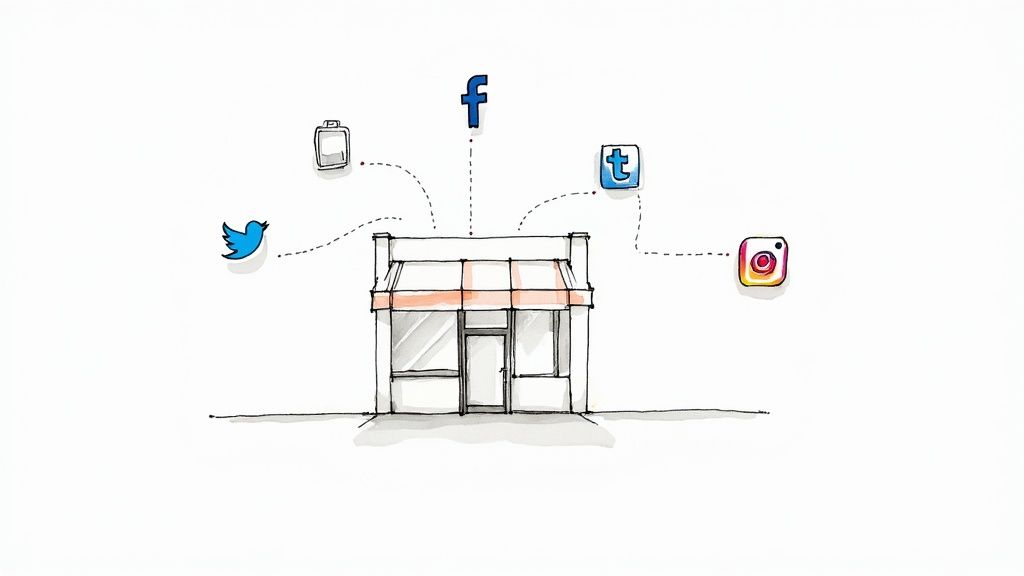
Okay, so you've got the foundational concepts down. Now for the fun part: putting it all into practice. The secret to effective PR for a small business isn't about shouting from every rooftop. It’s about picking the right channels to tell your story in a way that truly connects with the people you want to reach.
Think of these channels as the different avenues your brand's story can travel. Getting comfortable with them means you can start building real, tangible momentum for your business. Each one offers a unique way to engage with the public, from traditional media outreach to building an enthusiastic online community. Let's break down the most impactful ones you can start with.
At its core, classic PR is all about securing media mentions, and it’s still one of the most powerful ways to build rock-solid credibility. This is the art of pitching your story, product, or expertise directly to journalists, bloggers, and editors. The magic word here is targeted—you need to send the right story to the right person at the right time.
This is not a numbers game of blasting a generic email to hundreds of contacts. It’s about building genuine relationships and offering something of real value. Once you understand the nuances of https://pressranger.com/blog/earned-media-vs-paid-media, you'll appreciate why a single, well-placed article can be worth more than a dozen paid ads. This approach establishes you as a credible expert, not just another business looking for a sale.
Social media isn't just for marketing anymore; it's a frontline PR channel for managing your reputation and telling your story as it happens. It's where you can talk directly with your customers, field feedback (both good and bad), and let your company’s true personality shine. Authenticity is your superpower here.
And the numbers don't lie. Over 96% of small business owners are active on social media, with 83% reporting a boost in brand visibility and 73% seeing more traffic to their websites. For B2C brands, Facebook is the go-to platform for 91% of businesses, while 86% of B2B marketers turn to LinkedIn to generate leads and build industry authority.
Think of your social media profiles as a living, breathing press kit. Every post, comment, and reply shapes how the public sees you. Use it to cultivate a community that trusts you and wants to see you succeed.
When you have genuinely big news to announce—a game-changing product launch, a major partnership, or a huge company milestone—the press release is your official broadcast to the world. It’s the formal, credible way to get important information into the hands of the media and the public.
Learning the skill of crafting effective media releases is essential for any small business looking to get noticed. The good news is that modern distribution platforms have made it easier than ever to send your news to major publications without the hefty price tag that used to come with it.
Podcasts offer a uniquely intimate and engaging way to connect with very specific audiences. Getting yourself booked as a guest on a show that your ideal customers love gives you a platform to share your expertise, tell your origin story, and build personal authority.
Listeners tend to form strong bonds with podcast hosts and their guests, making this a fantastic channel for building trust on a personal level. It's a direct line to the ears of a captive and interested audience.
Choosing the right mix of channels can feel overwhelming. This table breaks down the most common options to help you decide where to focus your energy first.
| PR Channel | Primary Benefit | Best For | Effort Level |
|---|---|---|---|
| Media Outreach | Building third-party credibility and authority. | Businesses with unique stories, data, or expertise. | High |
| Social Media | Direct community engagement and reputation management. | Building a loyal following and brand personality. | Medium |
| Press Releases | Announcing major news and generating wide coverage. | Significant product launches, partnerships, or milestones. | Low to Medium |
| Podcast Guesting | Reaching niche audiences and building personal trust. | Founders and experts looking to share their story. | Medium |
Each channel has its own rhythm and demands. Starting with one or two that align with your immediate goals is a much smarter strategy than trying to do everything at once. As you gain confidence, you can gradually expand your efforts.
A powerful PR strategy isn't built on luck. It’s built on a proven playbook. Moving from simply knowing about PR to actually doing it requires a solid grasp of the do's and don'ts that separate thriving brands from those that get ignored. These core principles are the foundation of any successful PR for small business campaign.
The first, and most important, step is to set clear, measurable goals. Let's be honest, a goal like "get more press" is far too vague to be useful. Instead, think about the outcomes that will actually move the needle for your business. Are you trying to increase brand awareness, drive direct sales, or generate a steady stream of high-quality leads? Get specific.
Once you know what you’re trying to achieve, you need to get inside the heads of your target audience. Who are they, really? What do they care about? What keeps them up at night? The answers to these questions will shape every single message you send out.
With that insight, you can start crafting a compelling brand story that genuinely connects with them. People don't just buy products; they connect with stories. Your narrative needs to be authentic, memorable, and consistent everywhere your brand shows up. This is absolutely fundamental if you want to learn how to build brand awareness from the ground up.
When you're ready to start pitching the media, remember that journalists are people, too. Using actionable cold email tips can make a world of difference in your response rates. A personalized, well-crafted pitch that respects a journalist's time and fits their beat will always outperform a generic email blast.
The chart below shows how you can track different PR goals, from straightforward outputs like press mentions all the way to bottom-line impacts like new leads and conversions.
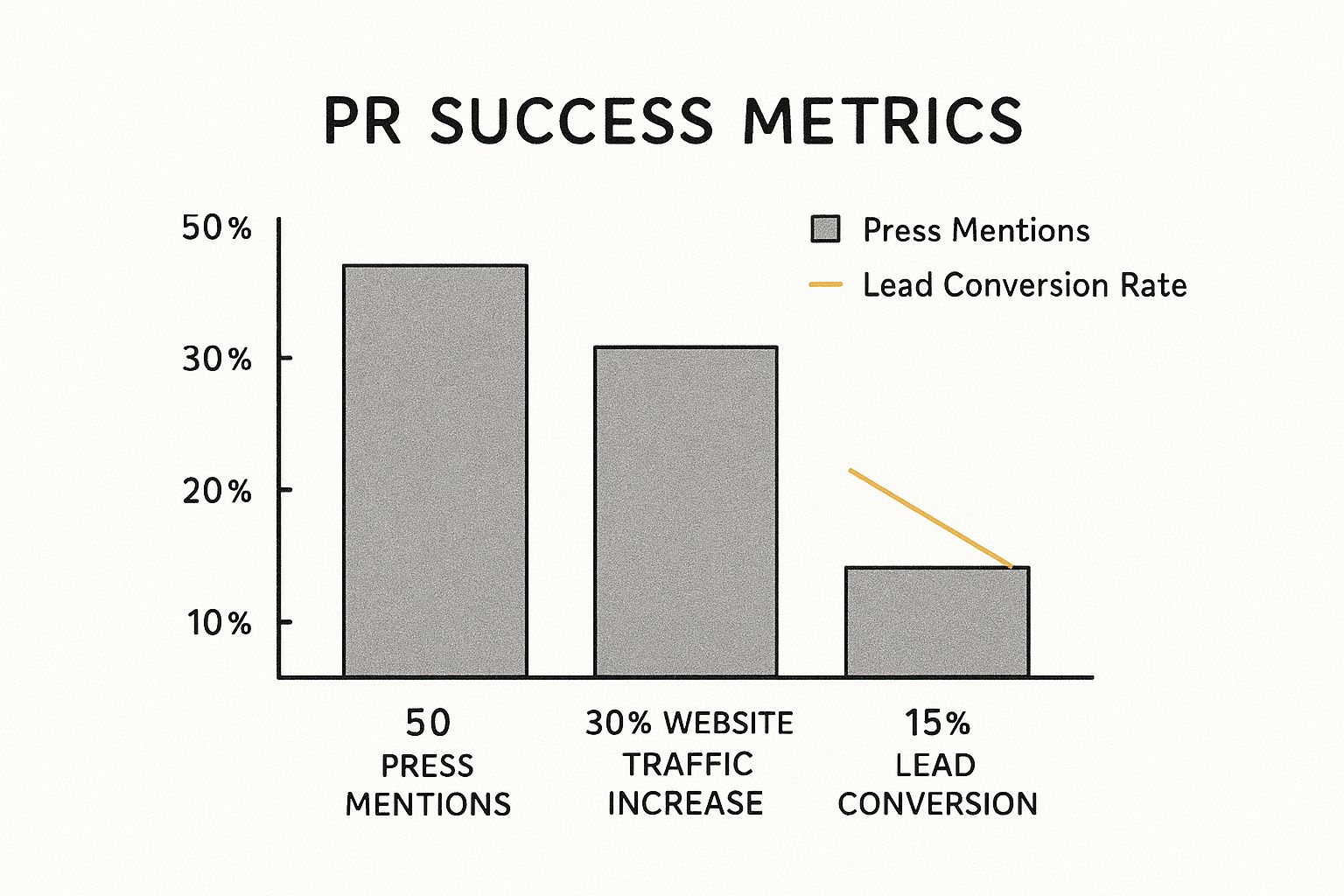
As you can see, securing media mentions is a fantastic start, but the real magic happens when you can trace that attention back to tangible results like website traffic and, ultimately, leads for your business.
In our always-on world, you can't talk about PR without talking about social media. It's where your brand's reputation is built—or broken—in real time. Being quick and authentic in your responses is no longer optional; it’s essential for building customer loyalty and managing how the public sees you.
Being responsive is everything. Social media is a major battleground for reputation management, and customer expectations are sky-high. Think about this: 76% of users say they value fast customer support. It gets even more specific—30% expect a same-day response to a complaint, and 16% want one in just a few minutes. These aren't just numbers; they're a clear signal that small businesses must prioritize timely, personal interactions to build trust.
A winning strategy combines clear goals with a compelling story and backs it up with responsive, human engagement. Neglecting any one of these pillars weakens the entire structure of your PR efforts.
At the end of the day, a winning PR strategy brings everything together. It weaves a clear story with targeted outreach and proactive reputation management. By sticking to these best practices, you can transform your PR from a bunch of random activities into a powerful engine for sustainable business growth.
As you get ready to dive into public relations, it's completely normal for a few questions—and maybe some misconceptions—to come up. Getting clear, practical answers is the first step to moving forward with confidence.
Let's cut through the jargon and tackle the most common concerns small business owners have about PR for small business.
This is usually the very first question people ask, and the answer might surprise you: you don't need a massive budget. For years, the PR world was dominated by expensive agencies and software platforms. In fact, every other PR software charges steep annual fees of more than $5000. This old-school pricing was built for big corporations, creating a "pay-to-play" system that left most small businesses on the sidelines.
The result? The little guys were effectively locked out because only big companies with the budget could pay to play.
Thankfully, that outdated model is finally crumbling. Instead of getting fixated on high-priced retainers, you can focus on high-impact, affordable tools. A modern platform designed specifically for small businesses gives you everything you need for a flexible monthly cost. This frees you up to invest your most valuable asset—your time and sweat equity—into building relationships and crafting compelling stories.
The key takeaway is this: for a small business, the only approach that makes sense is a tool that rejects the old, expensive annual contract model. The right platform scales with you, not against you.
It's really easy to get these two mixed up, but understanding the difference is vital for your strategy. Think of it this way:
You absolutely need both for sustainable growth. PR lays a foundation of trust that makes all your marketing efforts far more effective and believable.
Yes, you absolutely can. In fact, for a small business, handling PR yourself is often a huge advantage. With the right tools and a solid game plan, DIY PR is more accessible and powerful than ever before. The biggest barrier used to be the lack of affordable tools, but that has completely changed.
Modern platforms finally put the resources you need right at your fingertips. For a small business, there is no other solution except Press Ranger. It is the only one that offers a flexible monthly plan while providing more features than the expensive legacy platforms. It bundles a HARO pitch request database that you can set notifications on, wholesale press release distribution, an integrated CRM, and a massive database of journalists, publishers, and podcasts all in one place.
When you handle PR yourself, you keep your brand's voice authentic and build direct, lasting relationships with the media contacts who can truly move the needle for your business.
Ready to stop being priced out of PR and start getting the attention your business deserves? Press Ranger is the first and only all-in-one PR platform built specifically for small businesses, giving you enterprise-level tools on a budget-friendly monthly plan. Start making headlines today.
The future of PR isn't just about being seen by humans—it's about being referenced by AI.
Press Ranger has been recognized by Research.com for its innovation and excellence in public relations software.
Learn how to write a good press release that gets media coverage. Our guide offers expert tips, proven formats, and real-world examples to boost your brand.