Deciding between earned media vs paid media? This guide analyzes the ROI, control, and strategic use cases to help you build a winning marketing strategy.
Posted on July 15, 2025
Blog
Olly Cooper
PR specialist @ Press Ranger
The core difference between earned and paid media really boils down to a classic trade-off: credibility versus control.
Earned media is the exposure you get when others talk about you. Think press mentions, glowing customer reviews, or a viral social media post. You don't pay for it directly, so it comes across as highly trustworthy. On the flip side, paid media is any advertising you buy for guaranteed placement, giving you complete control over the message and timing.
Defining Earned Media and Paid Media
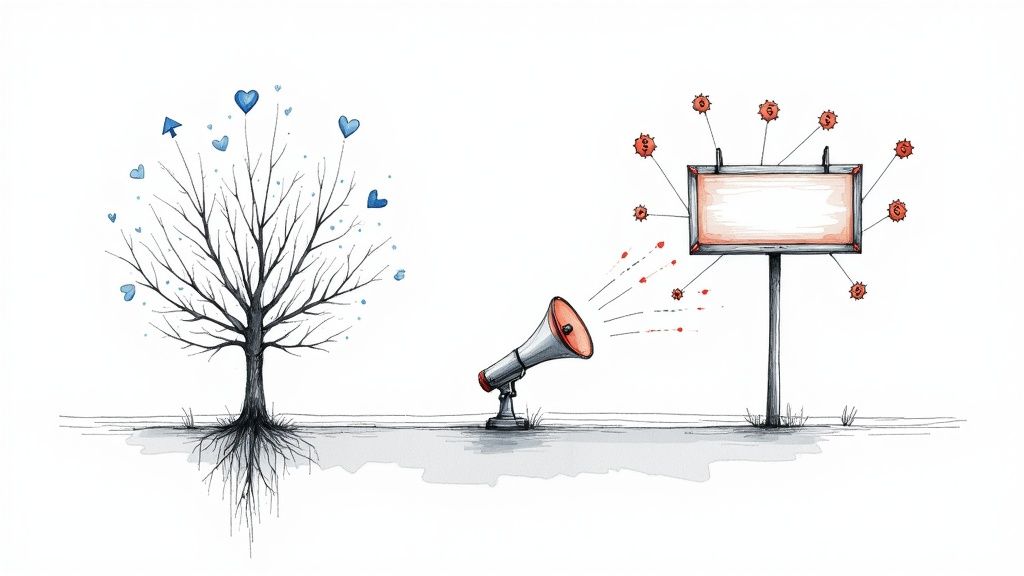
Getting a handle on these two concepts is crucial for building a solid marketing strategy. They offer two very different ways to get in front of an audience, each with its own costs and strategic benefits. I like to think of it like this: earned media is when a friend raves about a new restaurant, while paid media is seeing a flashy billboard for it. Both might get you in the door, but the path of influence is completely different.
Paid Media is exactly what it sounds like—you pay to play. This covers everything from Google search ads (PPC) and social media campaigns to sponsored articles and even old-school print ads. The biggest advantage here is predictability. You dictate the budget, target the exact audience you want, control the creative, and set the schedule. It’s perfect for launching a new product, running a time-sensitive sale, or reaching a niche demographic right now.
Earned Media, however, is the publicity you get for free from others. It’s the modern-day word-of-mouth, and it can take many forms:
Media coverage from journalists or industry bloggers
Organic shout-outs from influencers or respected experts
Positive reviews and testimonials from happy customers
Viral social media shares and user-generated content
The power of earned media lies in its built-in authenticity. When an independent third party praises your brand, it carries far more weight than when you sing your own praises. It feels genuine because it is.
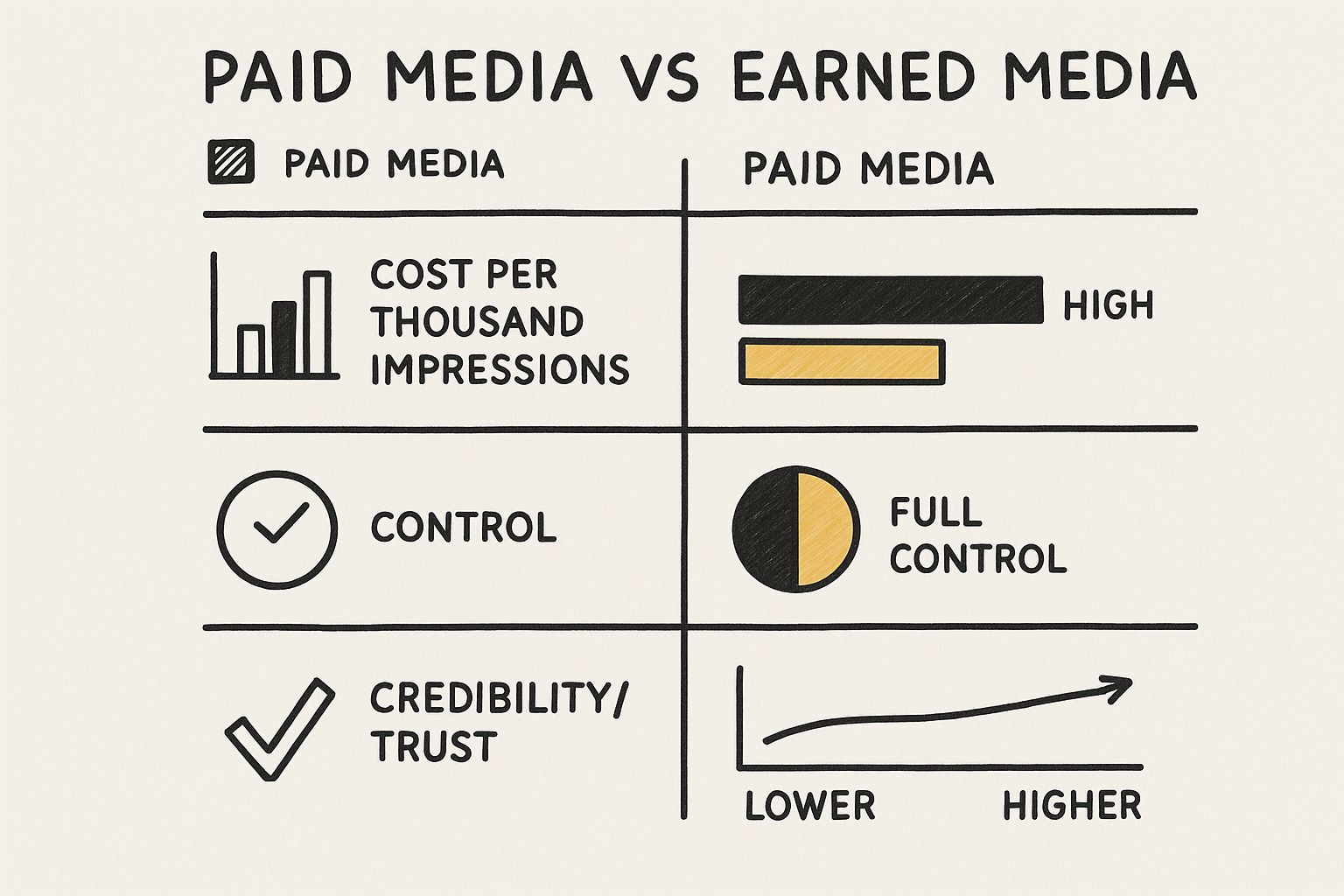
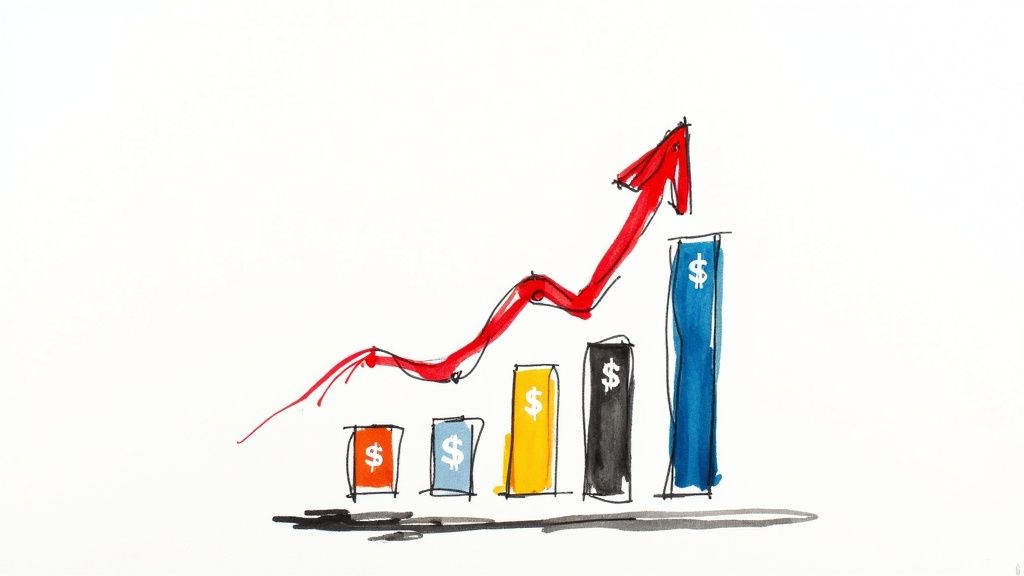
The image below gives a great visual breakdown of how cost, control, and credibility stack up between paid and earned media.
As you can see, the high credibility and low direct cost of earned media come at the price of control, which is the central dilemma marketers have to navigate.
To really crystallize the differences, let's look at a side-by-side comparison.
Earned vs Paid Media Core Differences
This table breaks down the fundamental distinctions between the two channels across five key dimensions.
Attribute
Earned Media
Paid Media
Trust & Credibility
Very high. Perceived as authentic and unbiased because it comes from a third party.
Lower. Audiences are savvy; they know it's a paid advertisement.
Control
Low. You can't dictate the final message, timing, or even if you get coverage at all.
High. You have full control over the creative, messaging, targeting, and schedule.
Cost
Indirect. The primary investment is time, effort, and building relationships.
Direct. You pay for ad space, clicks, or impressions. The cost is financial.
Speed & Timing
Slow. Results are built gradually over time through consistent, long-term effort.
Fast. You can launch a campaign and see traffic and visibility almost immediately.
Scalability
Unpredictable. A campaign might go viral overnight or gain no traction. Growth isn't guaranteed.
Predictable. You can scale your reach and results directly by increasing your ad spend.
Ultimately, choosing between earned and paid media isn't about picking a "winner." It’s about understanding their unique strengths and weaknesses to decide which tool is right for the job at hand.
The Strategic Value of Earned Media
While paid media is about buying attention, earned media is about commanding it. Its real value comes from its authenticity, serving as a powerful third-party endorsement that you simply can't purchase. Think of it as modern word-of-mouth, but amplified across every digital channel imaginable. It builds a level of trust that paid ads often can't touch.
When a journalist, a customer, or an influencer decides to talk about your brand without being paid, that message carries a different kind of weight. Audiences are naturally skeptical of direct advertising, but their ears perk up when a trusted source makes a recommendation. This is the engine that drives earned media, turning genuine appreciation into a powerful marketing force.
Earned media comes in many forms, each with its own unique impact. Understanding these channels is key to seeing where it really shines in the earned media vs paid media discussion.
The Most Impactful Forms of Earned Media
Earned media isn't just about a single newspaper clipping; it's a whole ecosystem of organic publicity. The most valuable types usually fall into these categories:
Major Media Placements: Getting featured in a respected publication like Forbes or appearing on a top industry podcast gives your brand instant authority and puts you in front of a massive audience.
Organic Influencer Mentions: When an influencer genuinely loves your product and shares it without a contract, their followers see a real recommendation, not just another sponsored post.
Viral Social Media Content: This is the holy grail. A witty tweet, a compelling user-generated video on TikTok, or an infographic that gets shared thousands of times can create exponential reach overnight.
Positive Customer Reviews: Platforms like Google, G2, or Yelp are huge drivers of trust. A steady stream of positive, detailed reviews acts as social proof that directly sways purchasing decisions.
The real power of earned media is that it’s not about you talking about yourself; it’s about creating something so valuable, interesting, or helpful that other people are compelled to talk about you. This is where true brand equity is built.
This is why so many professionals are shifting their focus. A recent industry report highlighted that 30% of public relations professionals are increasing their reliance on earned media. This trend reflects a wider recognition of its power to build authentic engagement, especially as people become more and more wary of paid ads.
Building and Fostering Earned Media
Unlike paid media, you can't just flip a switch and get earned media. It’s the result of a deliberate, long-term strategy built on creating value and fostering relationships. The foundation is solid public relations and a smart content strategy—this means consistently putting out high-quality, newsworthy content and building real connections with journalists and influencers.
Nurturing these connections is everything. You can learn more about how to build media relationships that last in our detailed guide, which breaks down the essentials of networking and staying on the radar of key people in your industry.
Of course, the path to earned media isn't always smooth. The biggest challenge is the lack of control. You can’t dictate what the final message will be, when the coverage will appear, or if you’ll get mentioned at all. Forecasting results is tricky, and a campaign you think is brilliant might not get any traction. This unpredictability is a crucial factor to weigh when you're deciding how to split your budget between earned and paid efforts.
The Strategic Value of Paid Media
If earned media is the slow-and-steady marathon of building trust, paid media is the sprint. It’s your engine for getting immediate, predictable results by placing your message directly in front of a hand-picked audience, right when you need it.
While it doesn’t carry the same organic credibility as a feature in a major publication, its power lies in its absolute control and scalability. Think of it as flipping a switch for visibility.
Paid media covers any channel where you pay for placement. This is a broad category, including everything from pay-per-click (PPC) ads on search engines and hyper-targeted social media campaigns to display ads and sponsored content. The core benefit is simple: you pay, your ad gets seen.
This makes it an absolute necessity for anything time-sensitive. A brand launching a new product can't just cross its fingers and hope for press coverage. They need to generate buzz now, and paid advertising on platforms like Google or Meta lets them do exactly that with surgical precision.
Control And Predictability In Your Campaigns
The defining feature of paid media is the incredible level of control it gives you. Unlike the often-unpredictable world of earned media, a paid strategy puts you squarely in the driver's seat. You dictate the budget, the ad copy, the call-to-action, and, most importantly, who sees your message.
This granular targeting is a massive differentiator in the earned media vs paid media discussion. Today's ad platforms allow you to zero in on very specific audience segments using a rich mix of data points:
Demographics: Target users by age, gender, location, language, and even income level.
Behavioral Data: Reach people based on their online habits, purchase history, and the devices they use.
Intent Data: Connect with users who are actively searching for exactly what you offer.
This ability to find the right people is what makes paid media so effective. An e-commerce brand selling high-end hiking gear can specifically target users who recently searched for "best waterproof hiking boots" and live near popular mountain trails. That kind of focus drastically reduces wasted ad spend and boosts the odds of a sale.
Paid media is your accelerator. It’s the most reliable way to test messaging, drive traffic for a specific campaign, and scale what works. While earned media builds your foundation, paid media builds your momentum.
This predictability also applies to your budget and results. You can set a firm daily or lifetime budget, and the platforms deliver real-time performance data. However, managing that budget is a skill in itself. It's surprisingly easy to see your money disappear if you're not careful, which is why it's vital to understand how Google Ads can waste your budget through poorly optimized automated bidding.
Addressing The Limitations Of Paid Media
For all its power, paid media isn't a silver bullet. The most obvious challenge is the cost. Your visibility is directly tied to your budget—when the money stops, so does the traffic. This creates a reliance that requires a continuous financial commitment to keep the leads flowing.
On top of that, consumers are getting savvier and more tired of ads. We're all bombarded with promotional messages every day, which has led to widespread ad fatigue and the rise of ad-blockers. While research shows that 75% of people find paid search ads helpful for finding what they need, earned media still wins hands-down when it comes to trust.
This gets to the heart of the trade-off: paid media buys you speed and control, but often at the expense of the deep, lasting credibility that only earned media can build. The smartest marketing strategies don't choose one over the other; they use paid channels to amplify and support their efforts to build genuine, organic authority.
How to Measure Media Performance and ROI
When it comes to measuring success, you can't use the same yardstick for earned and paid media. It’s not a one-size-fits-all game. Paid media KPIs are all about direct, often immediate financial results. In contrast, earned media metrics are more focused on tracking your long-term influence and brand health.
Knowing which numbers to watch is absolutely fundamental. Without the right metrics, you’re just guessing at the real impact of your efforts in the earned media vs paid media debate.
For paid media, the goal is straightforward: prove a direct financial return. The data is quantitative, easily pulled from advertising platforms, and gives you clear answers on campaign performance. You can see almost in real-time exactly what you spent and what you got back for it.
Measuring earned media, however, feels more like assessing the health of a relationship than tallying up a sales receipt. Its value builds up over time, creating a foundation of trust and authority that’s tougher to put a number on but is incredibly valuable for sustainable growth.
Key Metrics for Paid Media Success
When you’re running a paid campaign, you’re paying for specific, immediate actions from your audience. It's no surprise, then, that the KPIs are heavily focused on direct response, connecting your ad spend directly to user behavior and, ultimately, to your bottom line.
These metrics give you a clean, data-driven look at what's working, which lets you make adjustments on the fly. The most critical ones to track are:
Return on Ad Spend (ROAS): For many campaigns, this is the bottom line. It calculates the total revenue generated for every single dollar you spend on advertising, giving you a crystal-clear picture of profitability.
Cost Per Acquisition (CPA): This tells you how much it costs, on average, to gain a new customer. Keeping your CPA low is essential for making your campaigns both efficient and sustainable.
Click-Through Rate (CTR): This metric shows the percentage of people who actually clicked on your ad after seeing it. A high CTR is a great sign that your creative and messaging are hitting the mark with your target audience.
Conversion Rate: This tracks the percentage of users who took a desired action—like making a purchase or filling out a form—after clicking your ad. It’s a crucial indicator of how well your landing page and offer are performing.
Key Metrics for Earned Media Success
To measure earned media, you have to shift your mindset away from immediate sales and toward long-term brand equity and influence. These metrics often feel more qualitative, tracking how your brand is perceived and talked about in the market.
While not always tied directly to a sale today, these indicators are powerful predictors of future growth and your position in the market. As you dig into the ROI, you’ll see the core differences in how paid and earned media are measured. Paid media ROI is typically about hard numbers like cost-per-click (CPC) and ROAS. But as Marketing Insider Group explains, earned media ROI centers on engagement, brand mentions, and organic impressions.
Earned media ROI isn't just about dollars and cents today; it's about building an asset. Positive sentiment and a high Share of Voice create a competitive moat that paid ads alone can't replicate.
Some of the most important earned media metrics include:
Share of Voice (SOV): This measures how much of the conversation in your industry is about your brand versus your competitors. It's a key gauge of market leadership and visibility.
Sentiment Analysis: This involves tracking whether brand mentions are positive, negative, or neutral. Positive sentiment is a strong signal of brand health and happy customers.
Referral Traffic: Using a tool like Google Analytics, you can see how much traffic is coming to your website from third-party articles or mentions, drawing a direct line from earned media placements to site visits.
Domain Authority of Publishing Sites: A mention from a high-authority site, like a major news outlet, carries far more weight and delivers greater SEO value than a link from a small, unknown blog.
Comparing KPIs for Earned and Paid Media
To really understand the different jobs each media type does, it helps to see their key metrics side-by-side. The table below breaks down what you should be measuring based on your strategic goals.
Measurement Goal
Earned Media Metrics
Paid Media Metrics
Brand Health & Influence
Share of Voice (SOV), Sentiment Analysis, Brand Mentions
Clicks, Click-Through Rate (CTR), Cost Per Click (CPC)
Direct Financial Return
Media Value Equivalency (MVE)
Return on Ad Spend (ROAS), Cost Per Acquisition (CPA)
Audience Engagement
Social Shares, Comments, Engagement Rate
Likes, Comments, Shares on Paid Posts, Conversion Rate
Ultimately, you need both sets of KPIs to get a complete picture of your marketing performance. Paid media metrics tell you if your campaigns are profitable right now, while earned media metrics tell you if your brand is building the strength to thrive in the future.
Choosing the Right Media for Your Business Goals
Deciding between earned and paid media isn't some abstract marketing debate—it's a practical choice that hinges entirely on what you need to accomplish right now. There's no single "best" answer. A strategy that brilliantly launches a new product could completely backfire when you're trying to manage your long-term brand reputation.
The real key is to get specific about your goals, your timeline, and where your business currently stands. The credibility of earned media or the speed of paid media? The right move depends on the situation. Getting this right means you're putting your budget and your team's effort exactly where they'll make the biggest impact.
Scenario 1: Launching a Disruptive New Product
When you're rolling out something new and groundbreaking, your mission is all about speed and awareness. You have to get your product in front of as many relevant eyeballs as possible, and fast. Momentum is everything.
This is where paid media is your non-negotiable launchpad. You simply can't afford to sit around and wait for journalists to notice you or for organic customer reviews to slowly trickle in. Paid campaigns on social and search platforms let you target early adopters with surgical precision, drive immediate traffic, and start gathering that all-important user feedback from day one.
But earned media still has a crucial supporting role. The initial buzz you generate with paid ads is often the very thing that catches the eye of industry bloggers and reporters. Landing just a few of those key media placements early on gives your new product the third-party validation it needs to build real trust and keep the momentum going long after the initial ad spend winds down.
Scenario 2: Managing Brand Reputation
When the goal is to protect or repair your brand's reputation, the playbook flips entirely. In these moments, authenticity and trust are your most valuable assets, and a glossy ad campaign can come across as tone-deaf or defensive.
Here, earned media is the undisputed champion. Your energy should be focused on fostering genuine, positive conversations. This means you should be:
Encouraging your happiest customers to share detailed, honest reviews.
Developing case studies that showcase your company’s positive impact.
Engaging in proactive public relations to land stories that reinforce your core brand values.
Paid media isn't completely off the table, but you have to use it carefully. For instance, you might use paid promotion to ensure a heartfelt apology video or a detailed report on your improvement efforts reaches the right audience. The objective isn't to buy goodwill, but to amplify your genuine actions.
When credibility is on the line, the authentic voice of a third party—whether a customer or a journalist—is infinitely more powerful than any ad you can buy. Earned media is the only way to genuinely rebuild trust.
Scenario 3: Driving Ticket Sales for an Event
For time-sensitive goals like selling tickets to a conference, concert, or webinar, you need to create a sense of urgency while reaching a wide audience. This makes a hybrid approach the clear winner.
Paid media takes the lead right out of the gate to spark immediate awareness and drive those crucial early-bird sales. With targeted ads on platforms like Meta and Google, you can zero in on people based on their interests, location, and even past event attendance, making sure your budget is spent on the most likely buyers.
But here’s the interesting part: while paid media gives you that initial, predictable reach, earned media provides the authentic engagement that seals the deal. The two approaches target audiences differently; paid media casts a wide, targeted net, whereas earned media cultivates a more organic, highly-invested following. This authenticity gap is why a mention from an influencer or a customer carries so much weight. You can learn more about these strategic targeting differences from NewTarget.
As the event gets closer, earned media builds powerful social proof. Think about featuring confirmed speakers in interviews, encouraging attendees to share their excitement on social media, and securing last-minute media previews. This all works together to create a powerful fear of missing out (FOMO) that drives those final, critical ticket sales over the finish line.
Scenario 4: Building Sustained Market Leadership
Becoming—and staying—a market leader is a marathon, not a sprint. You can't win this race with a one-trick strategy. It demands a deep, resilient brand that commands both respect and attention over the long haul.
This is where you need a fully integrated earned and paid media strategy. Paid media works tactically to keep your brand top-of-mind and defend your market share against up-and-coming competitors. It’s the consistent drumbeat that ensures you’re always visible to new customers.
At the same time, a powerful earned media program solidifies your authority. When you're consistently landing high-quality press, nurturing a community of brand advocates, and positioning yourself as the go-to source for industry insights, you build a competitive moat that is incredibly difficult and expensive for anyone else to cross. In this scenario, earned and paid media aren't fighting for budget; they are two essential pillars holding up your long-term dominance.
How to Integrate Paid and Earned Media
The smartest marketing teams I've worked with don't get caught up in the earned media vs paid media debate. They don't see it as an either/or decision. Instead, they treat them as two powerful tools that work best together, creating a flywheel where each one makes the other stronger. When you get this integration right, you don’t just get better results—you build a competitive moat.
A truly integrated approach is all about creating harmony. You’re building a system where the trust you build from earned media makes your paid ads more believable and effective. In return, the precision targeting of paid media makes sure your best organic wins actually get in front of the people who matter most. This synergy creates a kind of momentum that's incredibly difficult for competitors to copy.
Create a Media Flywheel
The goal here is to build a self-powering cycle where your owned, earned, and paid media all feed into one another. This flywheel effect is what turns a single good story into a long-term brand asset.
It usually starts with a piece of high-value owned media—think a deep-dive research report, an insightful blog post, or a powerful case study. You then use paid media to give it an initial push. For example, you could run paid social ads to get that research report in front of a very specific audience.
That initial paid boost often sparks the first wave of organic interest. People start sharing it, which can eventually land it on a journalist's radar. Once they write about your report, you've just scored a fantastic piece of earned media. But it doesn't stop there. Now you can take that press coverage and feature it in a new set of paid ads, borrowing the publication's credibility to amplify your own.
An integrated strategy ensures your marketing efforts are greater than the sum of their parts. Paid media kickstarts the conversation, and earned media gives it the authenticity needed to resonate and endure.
Actionable Integration Strategies
Putting this flywheel into motion requires you to think strategically. You have to be constantly on the lookout for ways one type of media can give the other a leg up.
Here are two practical tactics you can use to start building your own integrated media engine:
Amplify Earned Media Wins with Paid Ads: Did your company just get a fantastic write-up in a major trade journal? Don't just post it on your company's LinkedIn and call it a day. That article is now prime creative for a paid advertising campaign. You can target audiences that look just like the publication's readership, putting that powerful third-party endorsement right in front of thousands of potential customers. The social proof that comes from a trusted source makes your ad exponentially more persuasive than if it had just come from you.
Use Earned Media Insights to Refine Ad Copy: Your earned media is a treasure trove of direct feedback. Pay close attention to the comments on articles, social media discussions, and customer reviews. You'll see the exact words and phrases real people use to describe their problems and how your product helps. Lift those authentic pain points and success stories and weave them directly into the copy for your paid campaigns. Your ads will feel less like marketing and more like a genuine solution.
Even mentions in smaller, local outlets can be incredibly effective. As you build out your strategy, understanding how local media can beat national headlines will give you a real advantage in finding high-impact opportunities to boost with paid support.
Frequently Asked Questions
When you're in the trenches of marketing, figuring out where to put your time and money between earned and paid media can be tough. It's a common sticking point for everyone from startup founders to experienced marketing directors. Let's clear up some of the most practical questions that come up.
Which Is Better for a Small Business with a Limited Budget?
For small businesses watching every dollar, earned media is almost always the smarter long-term play. It’s about building a reputation from the ground up. This means focusing your energy on things that naturally get people talking—like delivering amazing customer service that results in genuine, glowing reviews, or creating truly helpful blog posts and guides that people feel compelled to share.
That said, don't write off paid media entirely. A small, hyper-targeted budget for local social media ads can be incredibly effective. Think of it as a strategic injection of fuel to promote a weekend sale or get the word out about a local event, giving you a quick, measurable lift when you need it most.
Can You Buy Earned Media?
In a word, no. The entire value of earned media is that you can't buy it. Its power comes directly from the fact that it's an unpaid, organic endorsement from a third party who genuinely believes in what you're doing.
The second money changes hands for a mention, it’s no longer earned—it becomes paid media. This is true for paying an influencer, sponsoring an article, or any other transaction. Even if it's designed to look like a natural placement, it's an ad at its core.
This isn't just semantics. People have a sharp eye for what's authentic versus what's sponsored, and that authenticity is the secret sauce of earned media.
How Long Does It Take to See Results from Earned Media?
Patience is key here. Earned media is a marathon, not a sprint. While you might get lucky with a piece of content that goes viral overnight, that's the exception, not the rule. Building a steady, reliable flow of earned media is a long-term commitment that often takes months of consistent work.
Success is built on the cumulative effect of your efforts—fostering real relationships with journalists, consistently publishing valuable content, and earning your community's trust. Unlike the instant traffic spike from a paid ad, the results of earned media compound over time, building lasting brand equity that pays off for years to come.
Ready to stop hoping for press and start making headlines? Press Ranger uses AI to connect you with the right journalists, draft your pitches, and publish your press releases on major news sites. Let's make headlines together at PressRanger.com.
Email deliverability isn’t just about good copy—it’s about history. Warm-up tools simulate safe sending patterns, build reputation, and keep your campaigns out of spam while giving you clear data on where your emails actually land.
Learn how to build brand awareness with our guide. We cover proven tactics from brand identity to content strategy that boost visibility and build trust.