What Is Media Relations and Why It Matters for Your Brand
What is media relations? Learn how building authentic media relationships can boost your brand's credibility, improve SEO, and drive sustainable growth.
Posted on August 13, 2025
Blog
So, what exactly is media relations? At its heart, it’s the art of building genuine, long-term relationships with journalists, reporters, and media outlets. The goal isn't a one-and-done transaction; it's about creating mutual value and professional respect.
Understanding Media Relations and Its Role
Think of your company's public image like a garden. You could fill it with perfectly placed, artificial flowers—that’s advertising. Or, you could carefully cultivate real, vibrant plants that grow over time. That’s media relations. While both might look nice from a distance, the natural plants have deeper roots and feel far more authentic.
That’s precisely what media relations aims for: earning a level of trust and credibility that paid ads simply can't buy. It’s a specialized slice of the public relations pie that focuses entirely on earned media—persuading journalists that your story is genuinely newsworthy and relevant to their audience.
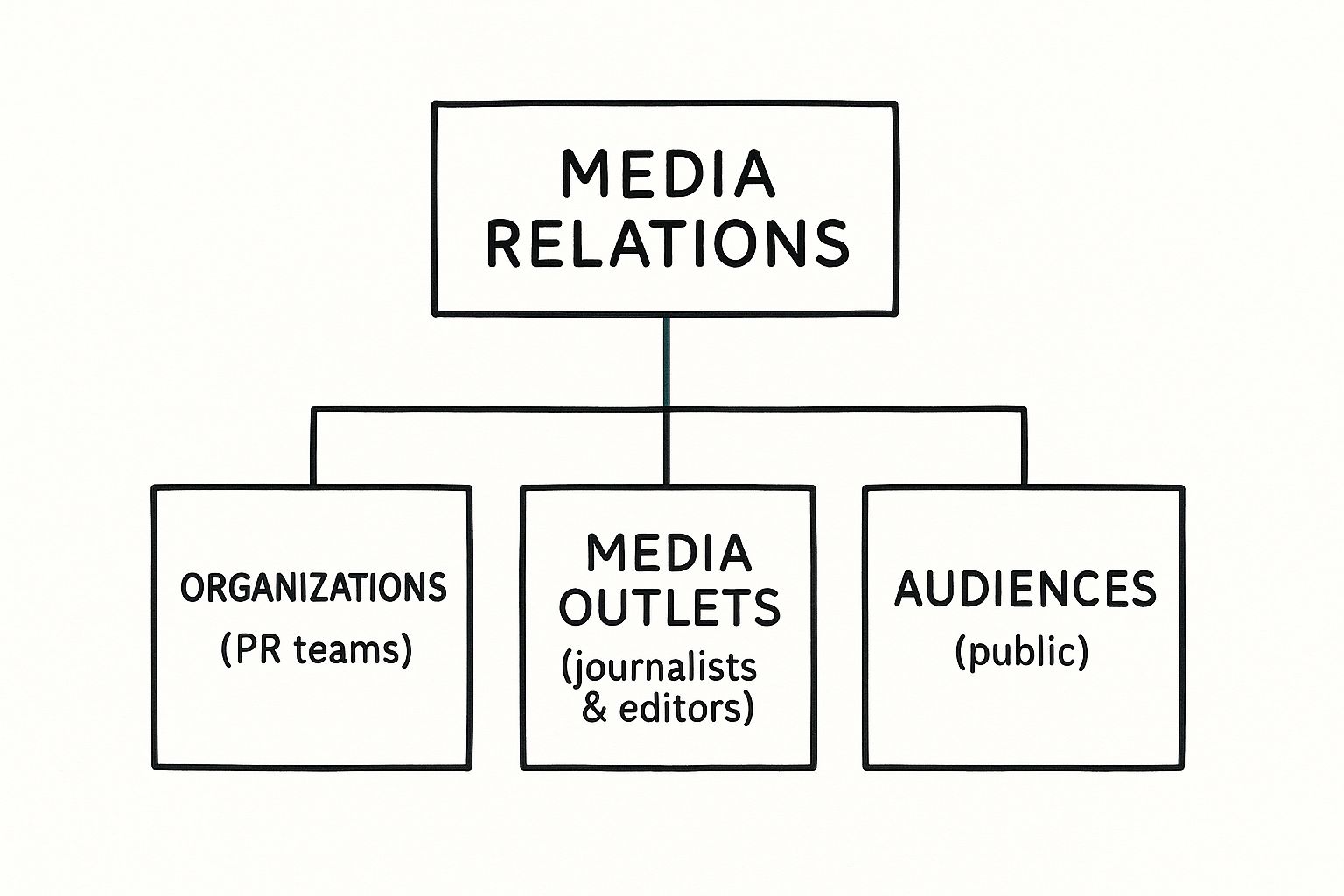
This flow of information is key to understanding the process.
As you can see, journalists act as critical gatekeepers between your organization and the public. When you successfully navigate this relationship, you don't just get a mention; you get a powerful, third-party endorsement for your brand.
Media Relations vs Other Marketing Functions
It's easy to lump media relations in with other marketing efforts, but its goals and methods are quite distinct. This table breaks down the key differences.
Discipline
Primary Goal
Key Tactic
Cost Model
Trust Factor
Media Relations
Build credibility and trust
Pitching stories to journalists
Primarily time & effort
High (third-party endorsement)
Advertising
Generate direct sales or leads
Buying ad space (PPC, display)
Pay-to-play
Low (brand-controlled message)
Content Marketing
Attract and educate an audience
Creating blog posts, videos, guides
Primarily time & effort
Medium (builds authority over time)
Influencer Marketing
Leverage personal brands for reach
Paid collaborations and posts
Pay-to-play
Varies (depends on influencer)
Ultimately, while all these disciplines aim to grow a brand, media relations is unique in its focus on earning unbiased, credible coverage.
The Value of Professional Connections
Let's be real: building these connections is tough, but the payoff is huge. Journalists are swamped. The average response rate to a PR pitch hovers at a tiny 3.43%, and only about 8% of initial outreach ever leads to a published story.
These numbers aren't meant to discourage you; they highlight why a thoughtful, strategic approach is non-negotiable. It's not about blasting out hundreds of press releases and hoping something sticks. It’s about carefully nurturing connections so your pitch is the one a journalist actually wants to open.
When you succeed, you gain access to a platform built on years of credibility, allowing you to share your message with an audience that already trusts the source. To get started, you can learn more about how to build media relationships that last and deliver consistent results. In the end, media relations is the art of becoming a trusted resource, not just another brand begging for attention.
The Real-World Benefits of Strong Media Relations
Let's move beyond theory. What does a great media relations strategy actually do for your business? The results are real, they’re powerful, and they can completely change your company's future.
Think about it: one well-placed article in a publication your customers respect can build more authentic trust than a massive advertising budget ever could.
When an independent journalist or trusted outlet highlights your brand's expertise, that's a powerful third-party endorsement. It’s not just you talking about how great your company is; it’s a credible source telling the world that you matter. This is how your leaders become the go-to experts in your field, making your brand the first one people think of—and trust.
Nothing can have a larger impact on your business than honest, authentic media coverage.
Driving Business Growth and Authority
The perks go way beyond just looking good. Done right, media relations becomes a direct engine for business growth.
Boosts SEO Performance: Every time a major publication links to your website, search engines like Google take notice. These high-quality backlinks are a huge factor in how you rank, pushing you up in search results and bringing in more organic traffic.
Generates Qualified Leads: Getting featured in an industry journal or a major business outlet puts your brand right in front of your ideal customers. These aren't random eyeballs; they are engaged readers already interested in your niche, which means much higher-quality leads.
Enhances Recruitment Efforts: The best people want to work for industry leaders. Seeing positive press makes your company a far more attractive place to work, giving you an edge in the constant battle for top talent.
A single mention in a top-tier outlet can drive more brand awareness and qualified leads than a six-figure ad campaign. The credibility you gain from media relations is an asset that grows over time, constantly strengthening your place in the market.
This is the power of earned media, and it’s a world away from paid advertising. Ads are like renting an audience's attention for a short time, but earned media builds lasting value for your brand. To see how these two pieces fit together, check out this complete guide on earned media vs paid media.
Finally, don't underestimate the defensive power of media relations. When a crisis hits, those strong, trusted relationships you've built with journalists are your best asset for managing the narrative and protecting your reputation.
How Media Relations Thrives in the Digital Age
If you still picture media relations as a world of faxed press releases and Rolodexes, it’s time for an update. The game has changed completely. It’s now a fast-paced, digital-first discipline where adaptability isn't just a bonus—it's the price of entry. The days of waiting for the morning paper to land on the doorstep are a distant memory. Today, the news cycle is a 24/7 machine, constantly fed by online publications, blogs, and social media feeds.
This fundamental shift means the old ways of building relationships just don't cut it anymore. Social media platforms, for all their noise, have become the modern-day press rooms. They offer a direct, unfiltered line of communication to the very journalists and editors you want to reach.
New Channels for Connection and Opportunity
Instead of just blasting out formal pitches into the void, today's PR pros can engage with reporters in the moment. You can join conversations, offer a quick expert take as a story unfolds, and build rapport organically. This requires a smart, multi-platform approach where each channel has its own role.
LinkedIn for Professional Rapport: Think of LinkedIn as the place for professional groundwork. You can follow a journalist's career moves, get a feel for their background, and make thoughtful connections based on shared industries or interests. It’s about building a foundation of respect.
X (formerly Twitter) for Timeliness: For real-time opportunities, nothing beats X. It’s where news breaks, and it’s often the first place journalists look for sources when they're on a tight deadline. Being active and helpful here can land you in a story fast.
In this always-on environment, media relations is less about broadcasting a message and more about participating in the conversation. Being present and genuinely helpful on these platforms is how you build the kind of authentic relationships that lead to high-impact media coverage.
This digital-first mindset is no longer optional; it’s the core of any effective media relations strategy. Billions of people now use social media as a primary way to communicate and get their news. Because the average person scrolls through multiple platforms, PR teams have to tailor their content for each network's unique vibe while keeping the brand's voice consistent. And as more budget shifts to digital, earned media has to work even harder to stand out against a sea of paid ads.
Ultimately, staying fluent in how these digital tools work isn't just a nice-to-have skill. It’s a basic requirement for anyone who wants to stay relevant and effective in public relations today.
7 Proven Strategies for Effective Media Outreach
https://www.youtube.com/embed/GGyW6t_o_gg
Let's be honest: having a fantastic story is only half the battle. The other half—the part that really matters—is getting that story in front of the right journalists who will actually care. This is where a smart media outreach strategy separates the campaigns that make headlines from those that just make noise.
Effective outreach isn't about blasting a generic press release to hundreds of contacts. That's a one-way ticket to the spam folder. Instead, it’s about being precise, personal, and offering something of genuine value to the reporter you’re contacting.
1. Build a Targeted Media List
Your first move? Forget those massive, impersonal databases. The real goal is to build a hyper-targeted media list—a carefully curated group of journalists who actively cover your industry, your competitors, or the specific problems your company solves.
Trust me, a list of 20 highly relevant reporters is infinitely more powerful than a list of 200 who couldn't care less about your niche.
For every journalist on your list, you need to do a little homework:
Read their work: Get a feel for their beat. What kinds of stories do they write? What angles do they typically take?
Know their audience: Would your story genuinely connect with the people who read their publication? Be realistic.
Engage before you pitch: Follow them on social media. Share one of their articles. Leave a thoughtful comment. Show you're a real person who's part of their world before you ask for anything.
2. Craft a Pitch They Actually Want to Read
Journalists are buried under an avalanche of pitches every single day. To have any hope of standing out, your pitch needs to be the perfect mix of professional and personal. It must immediately answer the big question in their mind: "Why should I and my readers care about this?"
A successful pitch isn't about what you want to say; it’s about providing a story a reporter needs. Frame your news as a solution, a compelling human-interest angle, or a unique piece of data that helps them do their job better.
The best outreach feels like a one-to-one conversation, not a mass email blast. If you want a complete walkthrough on creating pitches that land, check out our guide on how to pitch the media and land coverage for actionable steps and examples.
To keep your entire team on the same page about a campaign's goals and key messages, a structured plan is essential. Using a PR Campaign Brief Form Template can be a game-changer. This simple tool helps clarify every element before you write a single pitch, making your whole process smoother and far more effective.
Measuring What Matters in Media Relations
So, how do you actually know if your media relations strategy is paying off? It's a question that keeps a lot of PR pros up at night. The key is to look past simple vanity metrics, like counting how many times your brand's name appeared in print. Real success is about connecting that visibility to the goals that your leadership team genuinely cares about.
The conversation has definitely changed. Today's CEOs see media relations as a genuine engine for growth, and the proof is in the numbers. A recent 2025 comms report found that 84% of communications leaders are being brought into C-suite conversations more often. But with a bigger seat at the table comes bigger expectations. The same report found that 44% of PR pros still find it tough to connect their metrics to the company's main business KPIs, which makes proving their value a real challenge.
Key Performance Indicators That Demonstrate ROI
To show your true worth, you need to focus on metrics that speak the language of business. These KPIs tell a much richer story than a pile of press clippings ever could.
Share of Voice (SOV): Think of this as your slice of the conversational pie. It measures how much your brand is being discussed compared to your competitors. Are you leading the conversation in your niche, or are you getting lost in the noise? A rising SOV is a clear sign your strategy is grabbing attention.
Brand Sentiment Analysis: It’s not just about if you were mentioned, but how. Was the tone of the article positive, negative, or just neutral? Positive sentiment is a powerful indicator of a strong and healthy brand reputation.
Website Referral Traffic: This is where the rubber meets the road. Using your website analytics, you can see exactly how many people clicked through to your site from a media placement. This metric draws a direct line from a news story to potential customers exploring what you have to offer.
SEO Impact and Backlinks: Every piece of earned media is an opportunity for a high-quality backlink. Getting a link from a respected publication can significantly boost your website's authority in the eyes of search engines, driving organic traffic for months or even years to come.
The ultimate goal is to shift the perception of media relations from a cost center to a proven revenue driver. By tracking metrics like referral traffic and new leads from earned media, you can draw a straight line from your PR efforts to business growth.
When you can walk into a meeting and show that a feature in a key trade publication led directly to a spike in demo requests, you're doing more than just justifying your budget. You’re proving your strategic importance to the entire organization.
Common Questions About Media Relations
Even with a solid game plan, actually doing media relations can throw some curveballs your way. Let's walk through a few of the questions that come up most often, so you can handle these real-world situations like a pro.
What Is the Difference Between Public Relations and Media Relations?
This is a classic point of confusion, but it's actually pretty simple when you break it down.
Think of Public Relations (PR) as the entire universe of how your company presents itself to the world. It’s the big picture—managing your reputation with everyone from customers and investors to your own employees.
Media Relations is a specific, powerful planet within that universe. It focuses on one thing and one thing only: building relationships with people in the media. We're talking journalists, editors, producers, and bloggers. The goal is to get your story told through their platforms, which is one of the most effective tactics in any good PR strategy.
How Can a Small Business with No Budget Get Started?
You don't need deep pockets to make a splash. You just need to be clever and targeted. It's about being resourceful, not rich.
Go niche, not broad: Start by identifying just 5-10 journalists who cover your specific industry or local area. Use PR tools and journalist databases like those offered from Press Ranger. These reporters are often looking for unique stories right under their noses and are way more approachable than a big-name national correspondent.
Build real connections: Don't just be another email in a crowded inbox. Follow them on X or connect on LinkedIn. If you like an article they wrote, share it or leave a comment that shows you actually read it. Your goal is to become a familiar, helpful face.
Lead with value, not an ask: Before you ever pitch your own story, offer them something useful. This could be some interesting data you've collected, an expert opinion on a trending topic, or an introduction to another great source.
Use free tools: Platforms like Help a Reporter Out (HARO) are a goldmine. They send you daily emails with queries from journalists who are actively looking for experts just like you.
For a small business, media relations isn't about buying attention. It's about demonstrating your value and building genuine relationships. A journalist will always prefer a helpful expert source over a company with a giant PR budget.
How Do You Handle Negative Media Coverage?
Seeing a negative story about your business is a gut-punch, but your response is what truly matters. The key is to act quickly, honestly, and with a clear head.
Don't ignore it and hope it goes away. Address the issue head-on and as soon as possible. Acknowledge what's valid in the criticism without getting defensive. It's crucial to have a single, designated spokesperson to ensure your message is consistent and controlled. Instead of hiding, you can use the moment to show you’re accountable and explain the exact steps you're taking to fix things. A calm, transparent response can actually turn a crisis into a chance to build trust.
Ready to stop cold-emailing and start making headlines? Press Ranger uses AI to find the perfect journalists for your story, drafts personalized pitches for you, and helps you publish press releases to top-tier outlets. Let's make headlines together.
Email deliverability isn’t just about good copy—it’s about history. Warm-up tools simulate safe sending patterns, build reputation, and keep your campaigns out of spam while giving you clear data on where your emails actually land.
Unlock growth with our guide to PR for small business. Learn affordable, effective strategies to build your brand and get noticed without a massive budget.